Sunday, February 8, 2009
Corbin at Eranos

From the Complete Bibliography
(Listed by the year the lectures were delivered.)
The Eranos Foundation remains active on the shores of Lago Maggiore in Ascona, Switzerland. Their website provides, among other things, a history and details of the past conferences, lecturers and the Eranos Yearbooks. Many of these volumes are in print and available from Daimon Verlag. (It should be noted that there is another organization that has claimed the Eranos name. The link above is to the official Foundation in Ascona at the site of Olga Froebe-Kapteyn's original property.)
Corbin was first invited to speak in Ascona in 1949 as a replacement for Louis Massignon who characteristically refused to comply with the Eranos rule that politics not be discussed at the Conferences.
Corbin wrote a Forward for this book of Eranos Lectures edited by Joseph Campbell that describes the Eranos experience as he saw it: « The Time of Eranos », in: Man and Time: Papers from the Eranos Yearbooks. New York: Pantheon Books, 1957.
The Lectures

1949 « Le Récit d’initiation et l’hermétisme en Iran (recherche angélologique)», Eranos-Jahrbuch, XVII/1949. Zurich, Rhein-Verlag, 1950.
1951 « Rituel sabéen et exégèse ismaélienne du rituel », Eranos-Jahrbuch, XIX/1950, Zurich : Rhein-Verlag, 1951.
1952 « Le Temps cyclique dans le mazdéisme et dans l’ismaélisme », Eranos-Jahrbuch, XX/1951, Zurich : Rhein-Verlag, 1952.
1953 « Terre céleste et corps de résurrection d’après quelques traditions iraniennes (Mazdéisme, Ishrâq, Shaykhisme) », Eranos-Jahrbuch, XXII/1953. Zurich, Rhein-Verlag, 1954.
1954 « Epiphanie divine et naissance spirituelle dans la gnose ismaélienne » (texte original de la traduction anglaise infra, 1963-5), Eranos-Jahrbuch, XXIII/1954. Zurich, Rhein-Verlag, 1955.
1955 « Sympathie et théopathie chez les ‘Fidèles d’Amour’ en Islam », Eranos-Jahrbuch, XXIV/1955. Zurich, Rhein-Verlag, 1956.
1956 « Imagination créatrice et prière créatrice dans le soufisme d’Ibn ’Arabî », Eranos-Jahrbuch, XXV/1956. Zurich, Rhein-Verlag, 1957.
1957 « L’Intériorisation du sens herméneutique soufie iranienne : Sa’inoddîn ’Alî Torka Ispahânî et ’Alâoddawla Semnânî », Eranos-Jahrbuch, XXVI/1957. Zurich, Rhein-Verlag, 1958.
1958 « Quiétude et inquiétude de l’âme dans le soufisme de Rûzbehân Baqlî de Shîrâz », Eranos-Jahrbuch, XXVII/1958. Zurich, Rhein-Verlag, 1959.
1959 « L’Imâm caché et la rénovation de l’homme en théologie shî’ite », Eranos-Jahrbuch, XXVIII/1959. Zurich, Rhein-Verlag, 1960.
1960 « Pour une morphologie de la spiritualité shî’ite », Eranos-Jahrbuch, XXIX/1960. Zurich, Rhein-Verlag, 1961.
1961 « Le Combat spirituel du shî’isme », Eranos-Jahrbuch, XXX/1961. Zurich, Rhein-Verlag, 1962.
1962 « De la philosophie prophétique en Islam shî’ite », Eranos-Jahrbuch, XXXI/1962. Zurich, Rhein-Verlag, 1963. « In memoriam Olga Froebe », Eranos-Jahrbuch, XXXI/1962. Zurich, Rhein-Verlag, 1963.
1963 « Au ‘pays’ de l’Imâm caché », Eranos-Jahrbuch, XXXII/1963. Zurich, Rhein-Verlag, 1964.
1964 « Herméneutique spirituelle comparée : I. Swedenborg, II. Gnose ismaélienne », Eranos-Jahrbuch, XXXII/1964. Zurich, Rhein-Verlag, 1965.
1965 « La Configuration du Temple de la Ka‘ba comme secret de la vie spirituelle d’après l’œuvre de Qâzî Sa‘îd Qommî (1103/1691) », Eranos-Jahrbuch, XXXIV/1965, Zurich: Rhein-Verlag, 1966.
1966 « De la épopée héroïque à l’épopée mystique », Eranos-Jahrbuch, XXXV/1966. Zurich, Rhein-Verlag, 1967.
1967 « Face de Dieu et face de l’homme », Eranos-Jahrbuch, XXXVI/1967, Zurich: Rhein-Verlag, 1968.
1969 « Le Récit du nuage blanc (Hadîth al-ghamâma) commenté par Qâzî Sa‘îd Qommî (1103/1691) », Eranos-Jahrbuch, XXXVIII/1969. Zurich, Rhein-Verlag, 1971.
1970 « L’Esotérisme et le verbe ou l’initiation ismaélienne », Eranos-Jahrbuch, XXXIX/1970, Leiden : Brill, 1973.
1971 « Juvénilité et chevalerie (Javânmardî) en Islam iranien », Eranos-Jahrbuch, XL/1971, Leiden : Brill, 1973, pp 311-356.
1972 « Symbolisme et réalisme des couleurs en cosmologie shî’ite d’après l’œuvre de Mohammad Karîm-Khan Kermânî », », Eranos-Jahrbuch, XLI/1972, Leiden : Brill, 1974.
1973 « La Science de la balance et les correspondances entre les mondes en gnose islamique d’après l’œuvre de Haydar Âmolî (VIII/XIVe s.) », Eranos-Jahrbuch, XLII/1973, Leiden : Brill, 1975.
1974 « L’Imago Templi face aux profanes », Eranos-Jahrbuch, XLIII/1974, Leiden : Brill, 1977.
1976 « Le paradoxe du monothéisme », Eranos-Jahrbuch, XLV/1976. Leiden, Brill, 1980.
Critical Histories & Analysis
Hakl, Hans Thomas. Der verborgene Geist von Eranos: unbekannte Begegnungen von Wissenschaft und Esoterik : eine alternative Geistesgeschichte des 20. Jahrhunderts. Bretten: Scientia Nova, Verlag Neue Wissenschaft, 2001. English translation: Hakl, Hans Thomas. Eranos: An Alternative Intellectual History of the 20th Century. Oakville: David Brown Book, Forthcoming, 2010.
From the publisher: Few people are aware that from 1933 and for a period of almost seventy years, many of the worlds leading intellectuals met annually at Ascona on Lake Maggiore to give scholarly lectures about their latest insights in the fields of religion, philosophy, history, art and science and in particular to explore religion with an emphasis on its mystical and symbolic aspects. Known as the Eranos meetings (Eranos in Ancient Greek meant banquet), participants over the years comprised a galaxy of illustrious names in many branches of the humanities and sciences: Carl Gustav Jung, Erich Neumann, Mircea Eliade, Martin Buber, Walter F. Otto, Paul Tillich, Gershom Scholem, Sir Herbert Read, Joseph Campbell, Erwin Schrödinger, Karl Keréyni, D.T. Suzuki, Adolph Portmann and many others. Based on archival material, printed sources, private letters and interviews with Eranos presenters and participants, Hakl presents the only complete study of what is arguably the single most important gathering of scholars in the twentieth century. With a masterful hand, Hakl skillfully weaves together portraits of the exceptional people involved, their significance in the world of learning, the way they interacted with each other as well as the manifold influences that the meetings exerted. While in general sympathetic to the Eranos spirit, the author does not try to hide the negative aspects of the concern with esotericism, such as the Islamicist Henry Corbin's sympathy for the reign of the Shah, nor the Eranos patron (and OSS member) Paul Mellons' massive holdings in Iranian Oil. The final chapter concerns itself with an exploration of the political implications of the Eranos phenomenon and the tendency among esotericists towards authoritarian standpoints. The vignettes it offers of the lives and lively debates of leading twentieth century intellectuals will attract readers interested in the history of ideas, psychology, religious and cultural studies, Jewish and Islamic studies, the history of science, mysticism and the development of the new age religions. 480p, 47 b/w photos (Equinox Publishing 2009)
Wasserstrom, Steven M. Religion After Religion: Gershom Scholem, Mircea Eliade, and Henry Corbin at Eranos, Princeton University Press, Princeton, 1999.
Wasserstrom's book sparked a good deal of debate at the Annual Meeting of the American Academy of Religion. A record of the Symposium can be had here: Journal of the American Academy of Religion 2001, 69(2): 427 Symposium on Wasserstrom 1999. (pdf file requires subscription access).
Wasserstrom's critical remarks concerning Corbin's presumed politics and ideology have been addressed in print by Lory, Subtelney and Versluis as cited below:
Pierre Lory's Review of Wasserstrom
Maria E. Subtelny, “History and Religion: The Fallacy of Metaphysical Questions (A Review Article).” Iranian Studies: March 2003, 36(1): 91-101.
Arthur Versluis' Review at Esoterica.


Thursday, February 5, 2009
Corbin - Luther - Heidegger - Thomas of Erfurt
 The hermeneutic key to understanding prophetic philosophy came to Corbin through Martin Heidegger, but the prelude to this lies in Martin Luther, and in the Scholastic tradition of "speculative grammar," which has deep ties to the phenomenology of Husserl and Heidegger.
Luther's insight into the meaning of the significatio passiva was fundamental for Corbin. He writes,
"In the presence of the Psalm verse In justitia tua libera me [Deliver me in Thy righteousness - Psalm 71 KJV] Luther experienced a movement of revolt and despair: what can there be in common between this attribute of justice and my deliverance? ...[He] perceived in a sudden flash (and his entire personal theology was to result from this experience) that this attribute must be understood in its significatio passiva, that is to say, thy justice whereby we are made into just men, thy holiness whereby we are hallowed, etc... Similarly...[for Ibn 'Arabi] the divine attributes are qualifications that we impute to the Divine Essence...as we experience it in ourselves." (Alone with the Alone , 300, n. 25. For Erik Erikson's classic account of Luther's struggle with this Psalm passage in Young Man Luther see pp. 325ff in The Erik Erikson Reader.)
Corbin says that this experience of Luther's provided him with the key for understanding the meaning of mystical philosophy in Islam. It provides the connection between the Divine attributes in themselves and those attributes as they appear in the created world. Upon the significatio passiva hinges an entire cosmology, an entire metaphysics of creation. It provides another way of understanding the connection between "metaphysics," the intellect, and the transformation of the soul:
"One simple example: the advent of being in this theosophy, is the placing of being in the imperative: KN [Arabic], Esto (in the second person, not fiat). This is primary, it is neither ens nor esse, but esto. 'Be!'. This imperative inauguration of being, is the divine imperative in the active sense; but considered in the being that it makes be, the being that we are, it is the same imperative, but in its significatio passiva."
Corbin will link these "existential" ideas concerning the "modes of being" to the philosophy of Mulla Sadr. On this see Christian Jambet: The Act of Being: The Philosophy of Revelation in Mulla Sadra. Reviewed by David Burrell here.
Corbin continues, "I believe we can claim, therein, the triumph of hermeneutics as Verstehen [understanding], meaning that that which we truly understand, is never other than that by which we are tried, that which we undergo, which we suffer and toil with in our very being. Hermeneutics does not consist in deliberating upon concepts, it is essentially the unveiling or revelation of that which is happening within us, the unveiling of that which causes us to emit such or such concept, vision, projection, when our passion becomes action, it is an active undergoing, a prophetic-poietic undertaking." from Corbin's Interview with Philippe Nemo.
Corbin and Heidegger were both immersed in medieval theology and the German hermeneutic tradition. "Hermeneutics" in the Europe of the 19th and early 20th century still referred to the interpretation of the Bible. It was a theological concept. It was chiefly Heidegger who was to give the term the strictly philosophical and secular meaning that is has today. Corbin's reading of Heidegger was of course theological from the outset. His study of prophetic philosophy always centered on the meaning of the Book - on the true Interpretation of the Book.
In this extended excerpt from his interview with Nemo, Corbin gives a clear account of his reading of Heidegger's Being and Time in the early 1930's:
"First and foremost, I would say, there is the idea of hermeneutics, which appears among the very first pages of Sein und Zeit. Heidegger’s great merit will remain in his having centered the act of philosophizing in hermeneutics itself. Forty years ago, when one employed this word, “hermeneutic”, among philosophers, it had a strange, almost barbaric ring. And yet, it’s a term borrowed directly from the Greek and one that has its common usage among biblical specialists. We owe the technical definition to Aristotle: the title of his treatise peri hermenêias was translated into Latin as De interpretatione. We can go one better too, for in contemporary philosophical parlance hermeneutics is that which, in German, is called das verstehen, le “Comprendre,” “Understanding”. It is the art or technique of “Understanding”, as this was understood by Dilthey. An old friend, Bernard Groethuysen, who was once a student of Dilthey’s, always came back to this in the course of our discussions. There is, in fact, a direct link between the “Verstehen” as hermeneutic in Dilthey’s “Comprehensive Philosophy” and the “Analytic”, the idea of hermeneutics that we find in Heidegger.
That said, Dilthey’s concept is derived from Schleiermacher, the great theologian of the German Romantic period, upon whom Dilthey had consecrated an enormous and unfinished work. Precisely there, we relocate the theological origins, namely Protestant, of the concept of hermeneutics that we use in philosophical circles today. Unfortunately, I have the impression that our young Heideggerians have somewhat lost sight of this link between hermeneutics and theology. To find it again, one would obviously have to restore an idea of theology altogether different from that which holds sway today, in France as elsewhere, I mean that definition that has become subservient to sociology when it is not handmaiden to “sociological-politics”. This restoration could only come about through the concurrence of the hermeneutics practiced within the Religions of the Book: Judaism, Christianity, Islam, for it is therein that hermeneutics has developed as a spontaneous exegesis, and therein lie reserved its future palingenesis.
Why? Because therein one is in possession of a Book upon which all depends. It is indeed a question of understanding the meaning, but of understanding the true meaning. Three things to consider: there is the act of understanding, there is the phenomenon of the meaning, and there is the unveiling or revelation of the truth of this meaning. Now, are we to understand by this “true” meaning that which we currently call the historical meaning, or rather a meaning that refers us to an altogether other level than that of History as the word is commonly understood. From the very outset, the hermeneutics practiced in the Religions of the Book put into play the same themes and vocabulary familiar to phenomenology. What I was enchanted to rediscover in Heidegger, was essentially the filiation of hermeneutics itself passing through the theologian Schleiermacher, and if I lay claim to phenomenology, it is because philosophical hermeneutics is essentially the key that opens the hidden meaning (etymologically the esoteric) underlying the exoteric statement. I have as such done nothing more than attempt to deepen this understanding, firstly in the vast unexplored domain of Shiite Islamic gnosis, and then in the neighboring domains of Christian and Judaic gnosis. Inevitably, because on the one hand the concept of hermeneutics had a Heideggerian flavour, and because on the other hand my first publications concerned the great Iranian philosopher Suhravardî, certain historians stubbornly maintained their “virtuous insinuations” that I had “mixed up” (sic) Heidegger with Suhravardî. But to make use of a key to open a lock is not at all the same thing as to confuse the key with the lock. It wasn’t even a question of using Heidegger as a key, but rather of making use of the same key that he had himself made use of, and which was at everyone’s disposition. Thank God, there are some insinuations whose sheer ineptitude reduces them to nothing… that said, the phenomenologist would have a great deal to say about the “false keys” of historicism.
And specifically with regards to this last point, there is a book within the ensemble of Heidegger’s work about which, perhaps, we no longer speak of enough. It is true that it is an old book… it was one of the first that Heidegger wrote, for it was his “habilitation thesis.” I am referring to his book on Duns Scotus. This book contains pages that have been particularly illuminating for me, concerning as they do what our medieval philosophers called grammatica speculativa. I was to make immediate use of it upon being called to stand in for my dear departed friend Alexandre Koyré at the Section of Religious Sciences in the Ecole des Hautes Etudes, during the years 1937 through 39. Having to discourse upon Lutheran hermeneutics, I was able to put into practice that which I had learned of the grammatica speculativa." - Henry Corbin
Heidegger's Habilitationsschrift was published in 1916 under the title, Die Kategorien- und Bedeutungslehre des Duns Scotus. As it happens, the Bedeutungslehre attributed to Scotus was show in 1922 to be the work of Thomas of Erfurt (14th century), the author of De modis significandi sive grammatica speculativa. See this excellent article on Erfurt and the speculative grammarians. (Also here.) Now as Corbin laments above, Heideggerians have until recently much neglected these aspects of Heidegger's work. But the emphasis of scholarship is shifting and his early grounding in theology is receiving much more attention. Although wading into the deeps of Heidegger scholarship is fraught with perils, the works listed below are a place to start.
On the Early Heidegger and Medieval Theology
McGrath, S. J. The Early Heidegger & Medieval Philosophy: Phenomenology for the Godforsaken. Washington, D.C.: Catholic University of America Press, 2006. Reviewed by Christian Lotz in the Medeival Review, Sept. 2007, here (pdf).
Van Buren, John. The Young Heidegger: Rumor of the Hidden King. Bloomington: Indiana University Press, 1994.
_____ "The earliest Heidegger: a new field of research," in Dreyfus, Hubert L., and Mark A. Wrathall. A Companion to Heidegger. Blackwell companions to philosophy, 29. Malden, MA: Blackwell Pub, 2005.
Portions adapted from The World Turned Inside Out by the author.
Monday, February 2, 2009
Corbin - Dante - i Fedeli d'Amore
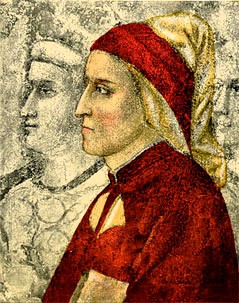 Corbin invokes Dante and the group of poets known in Italian as the Fedeli d'Amore time and again throughout his work. The primary source is Volume 3 of En Islam Iranien, Book 3, Les Fideles d'Amour. For the English speaking reader the best place to begin is his profound and beautiful book on the great Islamic mystic Ibn ‘Arabi, Creative Imagination in the Sufism of Ibn 'Arabi (now published as Alone with the Alone). Here he recounts an incident from the Master’s life that illuminates the question at the heart of the soul’s journey. In Mecca in the year 1201 (A.H. 598) the mystic and poet was a guest in the home of an Iranian family originally from Isfahan. The daughter of the house was a figure of surpassing intelligence, beauty and spiritual discernment. Her name was Nizam, ‘ayn al-Shams wa’l-Baha’, which is Harmonia, Eye of the Sun and of Beauty. As Beatrice did for Dante, so she revealed the human face of the eternal Sophia for Ibn ‘Arabi. Of his discussion of this incident, and of much else besides, Corbin writes,
"There is [one] term which perhaps calls for special justification: Fedeli d'amore. We have already had occasion to speak of the Fedeli d'amore, Dante's companions, and we shall speak of them again, for the the theophanism of Ibn 'Arabi has a good deal in common with the ideas of the symbolist interpreters of Dante (Luigi Valli) , though it is secure against such criticism as that of the literalist philologists, who were alarmed to see the person of Beatrice fade into pale allegory… In any case the young girl who was for Ibn ‘Arabi in Mecca what Beatrice was for Dante , was a real young girl, though at the same time she was “in person” a theophanic figure, the figure of the Sophia aeterna (whom certain of Dante’s companions invoked as the Madonna Intelligenza)…
It has not been our intention to re-open the great debate inaugurated by Asin Palacios, concerning the actual historical relations between those to whom we can give the name of the Fedeli d’amore in the East and West. It has seemed more important to indicate the undeniable typological affinities between them. We shall observe that this term Fedeli d’amore… does not apply indiscriminately to the entire community of Sufis; it does not, for example, apply to the pious ascetics of Mesopotamia who in the first centuries of Islam took the name of Sufi. In making this distinction we only conform to the indications provided by the great Iranian mystic Ruzbehan Baqli of Shiraz (d. 1209) in his beautiful Persian book entitled the Jasmine of the Fedeli d’amore. Ruzbehan distinguishes between the pious ascetics or Sufis, who never encountered the experience of human love, and the Fedeli d’amore for whom the experience of a cult of love dedicated to a beautiful being is the necessary initiation to divine love, from which it is inseparable. Such an initiation does not indeed signify anything in the nature of a monastic conversion to divine love; it is a unique initiation, which transfigures eros as such, that is, human love for a human creature. Ruzbehan’s doctrine falls in with Ibn ‘Arabi’s dialectic of love. It … makes Ruzbehan the precursor of that other famous man of Shiraz, the great poet Hafiz, whose Diwan is still observed today by the Sufis of Iran as a bible of the religion of love, whereas in the West it has been solemnly debated whether or not this Diwan has a mystic meaning. This religion of love was and remained the religion of all the minstrels of Iran and inspired them with the magnificent ta’wil [spiritual hermeneutic] which supplies a link between the spiritual Iran of the Sufis and Zoroastrian Iran, for according to this ta’wil the Prophet of Islam in person proclaims Zarathustra to b the prophet of the Lord of love; the altar of Fire becomes the symbol of the Living Flame in the temple of the heart." (Alone with the Alone, 100-101)
A few pages further on Corbin writes that those among the Sufis whom “we group as the Fedeli d’amore… [are] dominated by two great figures: Ibn ‘Arabi, the incomparable master of mystic theosophy, and Jalaluddin Rumi, the Iranian troubadour of that religion of love whose flame feeds on the theophanic feeling for sensuous beauty. Fedeli d’amore struck us as the best means of translating into a Western language the names by which our mystics called themselves in Arabic or Persian (‘ashiqun, muhibbun, arbab al-hawa, etc.) Since it is the name by which Dante and his companions called themselves, it has the power of suggesting the traits which were common to both groups and have been analyzed in memorable works. " (Alone with the Alone, 110)
The "memorable works" that Corbin cites in a note are by Miguel Asin Palacios, Enrico Cerulli and Luigi Valli. Asin Palacios first suggested Arabic sources for Dante's Commedia in 1919. The spirited debate that his thesis sparked is ongoing even today in the context of discussions about Western "Orientalism" in general. A history of the controversies up to 1965 is provided by Vincente Cantarino in his essay "Dante and Islam: History and Analysis of a Controversy," in De Sua, William J., and Gino Rizzo. A Dante Symposium in Commemoration of the 700th Anniversary of the Poet's Birth (1265-1965). Chapel Hill: University of North Carolina Press, 1965. More recently Maria Rosa Menocal has argued for Islamic influences in Medieval literature in her book Arabic Role in Medieval Literary History: A Forgotten Heritage. The Middle Ages series. Philadelphia: University of Pennsylvania Press, 1987. Also useful are these short articles: Otfried Lieberknecht, A Medieval View of Islam: Dante's Encounter with Mohommed in Inferno XXVIII and Paul Cantor, The Uncanonical Dante: The Divine Comedy and Islamic Philosophy.
Corbin himself was perfectly willing to accept the idea of Arabic influences on Dante, but he characteristically remained largely indifferent to any strictly historical analysis, and was concerned, unlike most modern scholars, with the"typological affinities" involved, as he remarks above. It is the spiritual similarity based on the archetype of Sophia that is important, not the existence or non-existence of historical influences, which he would nonetheless be inclined to accept.
For a concise and detailed overview of the relations among Dante and the Fedeli d'amore as well as the Arabic sources of the troubadour traditions from the point of view of someone who accepts Asin Palacios' basic account see Dante and the Fedeli d'Amore by Bruce MacLennan. The figure said to have been the leader of the Fedeli was Guido Cavalcanti. Also useful is this piece on the Troubadours.
For more on Ruzbehan see Henry Corbin, "The Jasmine of the Fedeli d'Amore: A Discourse on Ruzbehan Baqli of Shiraz," Sphinx 3: A Journal of Archetypal Psychology and the Arts, (London) 1990.
The portrait of Dante (from wikimedia) is atttribued to Giotto.
Wednesday, January 28, 2009
Corbin - Goethe - Islam
 An even minimally adequate discussion of Corbin's relation to Goethe would require an extended treatment. Here I merely point in that direction in the hope that someone may someday take up the task.
Corbin was a sophisticated and erudite student of the entire German intellectual and spiritual tradition and his references to Goethe should be viewed in that context.
There is an effectively infinite literature on Goethe. Here is a nice short piece which suggests some of the many reasons that Corbin was drawn to his work: Exiling the Esoteric: Goethe and the Literary Canon by Douglas Miller.
 Of special relevance for Corbin, Goethe was among the first Europeans of his era to take Eastern and "Oriental" philosophies and religions seriously. His interest in the Islamic world was profound and influential. For an introduction into this literature see the excellent article on Goethe's West-Oestlicher Divan by Jeffrey Einboden, The Genesis of Weltliteratur: Goethe's West-östlicher Divan and Kerygmatic Pluralism (pdf file access). (This work is available in English as: Goethe, Johann Wolfgang von, and John Whaley. Poems of the West and the East: West-Eastern Divan = West-Oestlicher Divan : Bi-Lingual Edition of the Complete Poems. With an Introduction by Katharina Mommsen, Germanic studies in America, no. 68. Bern: P. Lang, 1998). The primary source for the relation between Goethe and Islam is the work of Katharina Mommsen. See the short article here and Dr. Mommsen's webpage here. Her book Goethe und der Islam has not yet been translated from the German. (Image of the Divan on the right from wikimedia - click on the photo to enlarge and view the arabic script.)
There are a variety of short references to Goethe's Faust and alchemy thoughout Corbin's work (on Faust & alchemy see here and here; also see "Goethe's Faust as Opus Alchymicum" by Jack Herbert in Inward Lies the Way: German Thought and the Nature of Mind, Stephen Cross and Jack Herbert, Temenos Academy Papers no. 26, London: Temenos Academy). But there are two main places in Corbin's work where Goethe figures prominently. First there is an extended discussion of the spiritual physiology of colors in The Man of Light in Iranian Sufism (pp. 139-144. The same themes are treated also in "Realism and Symbolism of Color in Shi'ite Cosmology" in Temple and Contemplation). Here Corbin compares Goethe's Farbenlehre (Theory of Colors) (also here) with the physiology of the man of light as presented by Najm Kobra and Semnani. He quotes Goethe:
"The eye owes its existence to light. From an auxiliary, sensory apparatus, animal and neutral, light has called forth, produced fro itself, an organ like unto itself: thus the eye was formed by light, of light and for light, so that the inner light might come into contact with the outer light. At this very point we are reminded of the ancient Ionian school, which never ceased to repeat, giving it capital importance, that like is only known by like. And thus we shall remember also the words of an ancient mystics that I would paraphrase as follows:
If the eye were not by nature solar,
How should we be able to look at the light?
If God's own power did not live in us,
How would the divine be able to carry us off in ecstasy?"
(Goethe quoted in Man of Light, 139-40).
Corbin comments, "... the words of the anonymous mystic adopted by Goethe are what enable us to foresee the total convergence between Goethe's doctrine of colors and the physics of light of our Iranian mystics on whose side it represents a tradition going back to ancient pre-Islamic Persia." (Man of Light, 143).
The second extended treatment of Goethe is in Book VII of En Islam Iranien (volume IV, 390-410) in the opening section of his chapter on spiritual chivalry, entitled "From the Green Isle of the Johannites to an Unfinished Poem by Goethe." Here Corbin draws parallels among the ideas of spiritual chivalry in Medieval Europe as expressed in the mysticism of Tauler, Rulman Merswin, the Friends of God and the Order of St. John of Jerusalem, the mystical poems and epics of Goethe, and similar themes in Shi'ite Islam. Of Goethe's late, unfinished poem Die Geheimnisse (The Mysteries) Corbin writes
"the meaning given by Goethe to the pleroma of the twelve Knights corresponds to the meaning of the pleroma of the twelve Imams in a most striking manner, significant for the religious history of humanity. It is in the field of consciousness thus delimited by the assembly of the Twelve united around the Friend of God of the Oberland and by the assembly of the Twelve Knights that Goethe unites around the summit of an ideal Mont-Serrat, that we may observe at work the lines of force that blossom in the heart of Shi'ism in the idea of a spiritual chivalry common to the entire Abrahamic tradition, which also opens out in the work of Wolfram von Eschenbach in the idea of a chivalry common to the knights of both Christianity and the Orient, that is to say, in Islam." (En Islam Iranien IV, 393).
(Goethe's Poem can be found in English in only one place that I am aware of. It is translated in this rare volume by Rudolf Steiner: The Mysteries: A Christmas and Easter Poem by Goethe = Die Geheimnisse. Spring Valley, N.Y.: Mercury Press, 1987.)
Sunday, January 25, 2009
Archetypal Psychology and Henry Corbin
 Outside of the relatively small community of scholars and students of Islamic mysticism, the influence of Corbin's vision has been felt most profoundly among those who know of him through his Eranos Lectures and his friendships with C.G. Jung and the wide array of scholars who participated in the Eranos Conferences. Corbin gave his first lectures at Ascona, the home of the Eranos Foundation in 1949, and he lectured there annually until shortly before his death. Among the Eranos participants influenced by Corbin the most widely known to the general public is no doubt the American psychologist James Hillman, (Facebook Page) the central figure in the post-Jungian school of archetypal psychology and best-selling author of The Soul's Code and The Force of Character. In his account of the origins and the orientation of archetypal psychology Hillman writes as follows:
"The second immediate father of archetypal psychology [after C.G. Jung] is Henry Corbin (1903-1978), the French scholar, philosopher and mystic, principally known for his interpretation of Islamic thought. From Corbin comes the idea that the mundus archetypalis (‘alam al-mithal) is also the mundus imaginalis. It is a distinct field of imaginal realities requiring methods and perceptual faculties different from the spiritual world beyond it or the empirical world of usual sense perception and naïve formulation. The mundus imaginalis offers an ontological mode of locating the archetypes of the psyche, as the fundamental structures of the imagination or as fundamentally imaginative phenomena that are transcendent of the world of sense in their value if not in their appearance. Their value lies in their theophanic nature and in their virtuality or potentiality which is always ontologically more than actuality and its limits. (As phenomena they must appear, though this appearance is to the imagination or in the imagination.) The mundus imaginalis provides for archetype a valuative and cosmological grounding, when this is needed, different from such bases as: biological instinct, eternal forms, numbers, linguistic and social transmission, biochemical reactions, genetic coding, etc.
But more important than the ontological placing of archetypal realities is the double move of Corbin: (a) that the fundamental nature of the archetype is accessible to the imagination first and first presents itself as image, so that (b) the entire procedure of archetypal psychology as a method is imaginative. Its exposition must be rhetorical and poetic, its reasoning not logical, and its therapeutic aim neither social adaptation nor personalistic individualizing but rather a work in service of restoration of the patient to imaginal realities. The aim of therapy is the development of a sense of soul, the middle ground of psychic realities, and the method of therapy is the cultivation of imagination. (p. 15)
Corbin attributes [the recognition of the reality and independence of images] to the awakened heart as the locus of imagining, a locus also familiar in the Western tradition from Michaelangelo’s immagine del cuor. This interdependence of heart and image intimately ties the very basis of archetypal psychology with the phenomena of love (eros). Corbin’s theory of creative imagination of the heart further implies for psychology that, when it bases itself on the image, it must at the same time recognize that imagination is not merely a human faculty but is an activity of the soul to which the human imagination bears witness. It is not we who imagine but we who are imagined." (p. 19)
From: James Hillman, Archetypal Psychology: A Brief Account. (with a Bibliography of Archetypal Psychology compiled by Tom Cheetham), Uniform Edition of the Writings of James Hillman, Volume 1. Putnam, CT: Spring Publications, 2004. The best introductions to Hillman's work remain A Blue Fire, edited by Thomas Moore, and Re-Visioning Psychology.
Thursday, January 22, 2009
Corbin - Illich - Derrida
 As I have tried to suggest in my book After Prophecy, both Henry Corbin and Ivan Illich, for all their profound theological differences, shared a deep suspicion of the authoritarian structures of the institutional Church, and both were in their own ways creatively ecumenical in their understanding of Christianity. An attempt to understand the roots of their theological differences can prove to be a liberating experience for a dedicated reader of their work. In this spirit I would point out a book, recently translated into English, by Jacques Derrida and Mustapha Chérif: Islam & the West (PDF file here and here at amazon.com). Chérif is Professor of Philosophy and Islamic Studies at the University of Algiers and a Visiting Professor at the College of France, and Derrida was of course one of the most influential, famous, and even infamous, philosophers of the late 20th century. Both were born in Algeria, where French and Islamic culture have long met. Issues of cultural conflict, personal identity, and the social and philosophical meanings of the monotheistic tradition are of central importance in their lives. Derrida is one of the most powerful contemporary critics of authoritarian structures of all kinds, and through his late works especially, has had an enormous influence on what has come to be called post-modern theology (this volume is a good introduction). Although Henry Corbin was no post-modernist, neither was he a Traditionalist. He is a Romantic thinker in some of the many senses which Rothenberg and Robinson have powerfully delineated in their new book Poems for the Millennium, Volume 3. Corbin's theology of the creative imagination, his willingness to draw inspiration from a wide variety of spiritual, literary, philosophical and theological sources outside the boundaries of conservative academia, along with his quasi-Islamic and radical Protestant Christianity, place his work in a wholly unique position. If Corbin's vision is to have the wide influence which it deserves, it will have to be understood within the larger dialogue of contemporary multicultural and pluralistic thought which the complexities of the world forces upon us. Reading Derrida and Chérif with Corbin in mind is one possible step on that long path.
Ruins of a Mosque, Mansoura, outside Tlemcen, Algeria.
Annotated Bibliography
 This is a list of contemporary scholars and others who have written about Henry Corbin or whose work has been significantly influenced by his vision. Entries for individuals are representative and not complete.
(Sadly, I have not updated this since 2009 - TC)
A Complete Bibliography of Corbin's own works is available from
Les Amis de Stella et Henry Corbin
Timurid Watercolor, Shiraz. Freer & Sackler Galleries
Abaza, Mona. "Henry Corbin, the absent centre", Ch. 7 in Debates on Islam and Knowledge in Malaysia and Egypt: Shifting Worlds, London: Routledge, 2002.
Adams, Charles J., "The Hermeneutics of Henry Corbin," in Approaches to Islam in Religious Studies, Martin, ed., Univ. Arizona, 1985.
Algar, Hamid. “The Study of Islam: The Work of Henry Corbin.” Religious Studies Review 6(2) 1980: 85-91.
Aminrazavi, Mehdi. Suhrawardi and the School of Illumination, Richmond : Curzon, 1997.
Amir-Moezzi, M., Christian Jambet et Pierre Lory, (Editors). Henry Corbin: Philosophies et Sagesses des Religions du Livre. Brepols, 2005. Essays by Christian Jambet, Jean-Michel Hirt, James W. Morris, Jean Francois Marquet, Jean-Louis Viellard-Baron, Mohammad Amir-Moezzi, Michel Chodkiewicz, Guy Monnot, Daniel De Smet, Paul Ballanfat, Charles-Henri Fouchecour, Hermann Landolt, Paul B. Fenton, Simon C. Mimouni, Gerard Wiegers, Maria E. Subtelney.
Avens, Roberts, Imagination as Reality: Western Nirvana in Jung, Hillman, Barfield & Cassirer, Spring Publications, 1980.
____ The New Gnosis, Spring Publications, 1984.
____ "Things and Angels, Death and Immortality in Heidegger and in Islamic Gnosis," Hamdard Islamicus VII(2): 3-32, Summer, 1984
____ "Theosophy of Mulla Sadra," Hamdard Islamicus IX(3): 3-30, Autumn, 1986
____ "Henry Corbin and Suhrawardi's Angelology," Hamdard Islamicus XI(1): 3-20, Spring 1988
____ "Corbin's Interpretation of Imamology and Sufism," Hamdard Islamicus XI(2): 67-79, Summer, 1988
____ "The Subtle Realm: Corbin, Sufism and Swedenborg," in Immanuel Swedenborg: A Continuing Vision, ed. Robin Larson, Swedenborg Foundation, New York, 1988.
____ "Henry Corbin's Teaching on Angels," translated from the German by Hugo M. Van Woerkom; Gorgo 18 (1988). pdf file available from Scribd requires (free) registration.
Azadpur, Mohammad. "Unveiling the hidden. On the Meditations of Descartes and Ghazzali", in Tymieniecka, Anna-Teresa (Ed.) - The Passions of the Soul: In the Metamorphosis of Becoming, Dordrecht: Kluwer Academic Publishers, 2003.
Bamford, Christopher, "Esoterism Today: The Example of Henry Corbin," Introduction to The Voyage and the Messenger: Iran and Philosophy, 1998, trans. Joseph Rowe, North Atlantic Books, Berkeley [translation of L'Iran et La Philosophie, Fayard, 1990]
Băncilă,Ionuţ Daniel. "Some Aspects of Manichaeism as Religion of Beauty [in English]," Caietele Echinox (Romania) Issue no.12 /2007. "The study investigates the aspects of Beauty in Manichaean teachings, following certain intuitions by Henry Corbin and Ilya Gershevitch. The Living Soul imprisoned in this material word, the Manichaean dissemination of the Zoroastrian figure of the Virgin of the Good Deeds, as well as the descriptions of the otherworldly ”Gardens of Light” offer as many instances and occasions for the Manichaeans to praise Beauty, although always as situated above and out of this world."
Bloom, Harold, Omens of Millennium: The Gnosis of Angels, Dreams and Resurrection, Riverhead Books, New York, 1996.
_____ Preface to Princeton Mythos re-issue of Creative Imagination in the Sufism of Ibn 'Arabi, with the new title, Alone with the Alone, 1997.
Bosnak, Robert - Analyst in private practice, Sydney, Australia. Corbin & Dreamwork.
(rbosnak@mindspring.com). Author of A Little Course in Dreams and Tracks in the Wilderness of Dreaming both discuss Corbin. His latest book Embodiment: Creative Imagination in Medicine Art and Travel (Routledge, 2007) is written as a tribute to Henry Corbin.
_____ "My Eranos," (With several mentions of Corbin. Bosnak's own work has been profoundly influenced by Corbin). The San Francisco Jung Institute Library Journal, Winter 1987, Vol. 7, No. 1, Pages 25–29.
Braga, Corin. Imagination, Imaginaire, Imaginal: Three Concepts for Defining Creative Fantasy by Corin Braga. (pdf file) at Phantasma: Center for Imagination Studies (Romanian), with a subsection "Mundus Imaginalis" referencing Henry Corbin.
Brown, Norman O., "The Prophetic Tradition," in Apocalypse &/or Metamorphosis, University of California Press, Berkeley, 1991.
____ "The Apocalypse of Islam," in op. cit.
Brown, Vahid, "A Counter-History of Islam: Ibn 'Arabi within the Spiritual Topography of Henry Corbin," Journal of Ibn Arabi Society,Volume XXXII, Autumn 2002. (Brown adopts Wassertrom's methods and is critical of Corbin's approach to Ibn 'Arabi).
Cheetham, Tom. The World Turned Inside Out: Henry Corbin and Islamic Mysticism. New Orleans: Spring Journal Books, 2003.
_____ Green Man, Earth Angel: The Prophetic Tradition and the Battle for the Soul of the World. With an Introduction by Robert Sardello. SUNY Series in the Western Esoteric Tradition, SUNY Press, Albany, NY, 2005.
_____ After Prophecy: Imagination, Incarnation and the Unity of the Prophetic Tradition. Lectures for the Temenos Academy. Spring Journal Books, 2007.
Chittick, William, The Sufi Path of Knowledge: Ibn 'Arabi's Metaphysics of the Imagination, SUNY Press, Albany, 1989.
____ Imaginal Worlds: Ibn al-'Arabi and the Problem of Religious Diversity, SUNY Press, Albany, 1994.
____ The Self-Disclosure of God: Principles of Ibn 'Arabi's Cosmology, SUNY Press, Albany, 1998.
Cobb, Noel. Archetypal Imagination: Glimpses of the Gods in Life and Art, Hudson, NY: Lindisfarne Press, 1992.
Copjec, Joan. SUNY Buffalo, Area of interest: Corbin & Lacan
Davies, Paul. Romanticism & Esoteric Tradition: Studies in Imagination, Hudson: Lindisfarne, 1998.
Durand, Gilbert. Founder of Le Centre de recherche sur l'imaginaire. Colleague of Jung, Corbin and Gaston Bachelard.
____ Les Structures anthropologiques de l'imaginaire, Paris, Dunod (1re édition Paris, P.U.F., 1960).
____ Champs de l’imaginaire. Textes réunis par Danièle Chauvin, Grenoble, Ellug, 1996. Includes complete bibliography.
El-Bizri, Nader. The Phenomenological Quest: Between Avicenna and Heidegger, Binghamton, N.Y.: Global Publ., 2000.
Ernst, Carl W. Rūzbihān Baqlī: Mysticism and the Rhetoric of Sainthood in Persian Sufism, Richmond, Surrey : Curzon Press, 1996.
Faivre, Antoine. Access to Western Esotericism, SUNY Press, Albany, 1994.
____
Giuliano, Glauco. Il Pellegrinaggio in Oriente di Henry Corbin. Con una scelta di testi. Lavis (Trento-Italia), La Finestra editrice, 2003.
_____ Nîtârtha. Saggi per un pensiero eurasiatico. Lavis (Trento-Italia), La Finestra editrice, 2004.
Green, Nile. Department of History, UCLA. "Between Heidegger and the Hidden Imam: Reflections on Henry Corbin's Approaches to Mystical Islam", in Mohammad-Reza Djalili, Alessandro Monsutti & Anna Neubauer (eds), Le Monde turco-iranien en question (Paris: Karthala, forthcoming 2008). [Unauthorised draft version previously published in Method and Theory in the Study of Religion 17, 3 (2005), pp.219-226]
Hajhosseini, Morteza. Analytic Comparison between 'Allahmah Tabataba's's View and that of Henry Corbin concerning Human Perfection, Transcendent Philosophy 1: 31-45
Hillman, James - The Uniform Edition of the Writings of James Hillman. Although he makes use of the concept of the mundus imaginalis in ways of which Corbin would not necessarily have approved, Hillman's entire work is profoundly marked by Corbin's influence.
Hughes, Aaron W. & Abraham ben Meïr Ibn Ezra. The Texture of the Divine: Imagination in Medieval Islamic and Jewish Thought, Bloomington: Indiana Univ. Press, 2004.
Hume, Lynne. Assoc. Prof., University of Queensland, Brisbane, Australia. Portals: Opening Doorways to Other Realities Through the Senses. Berg, 2007.
Idel, Moshe, Kabbalah: New Perspectives, Yale University Press, New Haven 1998.
____ Absorbing Perfections. New Haven: Yale University Press, 2002.
Iranzo, Ivor Pinto. About the Imaginary . On Gilbert Durand.
Jambet, Christian. Institut d'Etudes Iraniennes (University de Paris III) and l'Ecole Pratiques des Hautes Etudes. Henry Corbin, edited by Christian Jambet, Cahier de l'Herne, no. 39. Consacré à Henry Corbin, 1981.
____ La Logique des Orientaux: Henry Corbin et la Science des Formes. Paris: Seuil, 1983.
____ La Grande résurrection d’Alamût: Les formes de la liberté dans le shî’isme ismaélien, Verdier, Paris, 1990.
____ "The Stranger and Theophany," (English translation of Le Caché et l'Apparent). Umbr(a): A Journal of the Unconscious 2005 - The Dark God: 27-41. (Publication of Center for the Study of Psychoanalysis and Culture - SUNY Buffalo).
____ The Act of Being: The Philosophy of Revelation in Mulla Sadra. New York: Zone Books, 2006.
Landolt, Hermann, "Henry Corbin, 1903-1978: Between Philosophy and Orientalism," Journal of the American Oriental Society, 119(3): 484-490 (1999).
Laude, Patrick. An Inner Islam: Insights in Massignon, Corbin, Guénon and Schuon. Albany, New York: State University of New York Press, 2009 (forthcoming).
Lawson, Todd. Associate Professor, University of Toronto, Dept. of Near and Middle Eastern Civilizations.
____ Reason and Inspiration in Islam: Philosophy, Theology and Mysticism in Muslim Thought, London & New York, I.B. Taurus, 2005.
____ The Crucifixion and the Qu'ran: A Study in the History of Muslim Thought, Oxford, One World, 2009.
Lory, Pierre. Directeur scientifique des études médiévales, modernes et arabes, Institut francais du Proche-Orient, Damascus; Directeur d'études à l'EPHE, 5e section, chaire de mystique musulmane, Paris.
____ Alchimie et mystique en terre d'Islam , Lagrasse, Verdier, Collection " Islam spirituel ", 1989.
____ Le rêve et ses interprétations en Islam, Paris, Albin Michel, 2003.
____ La science des lettres en terre d’Islam, Paris, Dervy, 2004.
____ « Henry Corbin, explorateur des terres d’émeraude », in Symbole, n° 1 (May 2007).
____ Review of Wasserstrom, 1999, at amiscorbin.com.
____ Jean-Louis Vieillard-Baron, Gregoire Lacaze, Jean-Francois Marquet, Antoine Faivre (eds.) Henry Corbin et le Comparatisme Spirituel, Paris, Arche, 2000.
Mahmoud, Samir. PhD Candidate, Faculty of Divinity, University of Cambridge, UK. Interests: Islamic mystical philosophy (Ibn 'Arabi and Suhrawardi); Henry Corbin; Platonism; Islamic Aesthetics; Comparative Aesthetics; History of Art and Architecture; History of cross-cultural exchanges in ideas, art, and architecture between the Muslim world and Europe. email: delphi93@hotmail.com, samir.mahmoud.cantab@gmail.com. Recent Work: "From Heidegger to Suhrawardi: An Introduction to the Thought of Henry Corbin," (2006, published on official website of Henry Corbin edited by Pierre Lory); "'Alam al-Mithal or the Mundus Imaginalis," (paper presented to conference on Philosophy of Religion at the University of Marburg, 2006 to be published in 2008); "Ta'wil and the Angel," paper to be published in 2008; "Suhrawardi and Plotinus on Self-Knowledge as Illumination," (paper presented at Prometheus Trust Conference, Glastonbury, England 2007 to be published under same title in 2008 currently under peer review); "Carl Gustav Jung in the Light of Traditional Psychology or Pneumatology: Some Explorations on Self and Salvation," (paper to be published in 2008 currently under peer review); Currently working on a PhD on the topic of medieval Islamic Philosophical Aesthetics. Dissertation title is: The Art of Remembrance and the Aesthetics of Unity. The thesis draws heavily on Corbin's interpretation of Ibn 'Arabi, Suhrawardi, and Avicenna and it is also indebted to Corbin's dispersed remarks on Islamic art, architecture, and aesthetics.
Mann, Mary Pat. The Door to the Imaginal Realm, Mytholog 4(3): 2006.
Marcotte, R. "Phenomenology through the eyes of an Iranologist: Henry Corbin," The Bulletin of The Henry Martyn Institute of Islamic Studies (1995)14,1-2,55-70. The journal's editor states that this article is both an "insightful and comprehensive analysis of the types and schools of thought which helped to shape the views of one of the best known Islamic scholars of the mid-twentieth century". "Although Corbin's methodological approach is devalued by many scholars today, Marcotte points out that his attempt to form a 'spiritual-type phenomenology' offered fresh and challenging ways of interpreting Islamic thought which, despite their inherent limitations, are still worthy of consideration".
Miller, David. L., The New Polytheism, Dallas: Spring Publications, 1991.
Morris, James Winston. The Reflective Heart: Discovering Spiritual Intelligence in Ibn 'Arabi's Meccan Illuminations. Fons Vitae, 2005.
____ Religion After Religions?: Henry Corbin and the Future of the Study of Religion. In Philosophies et Sagesses des Religions du Livre, ed. P. Lory and M. Amir-Moezzi, Tournhout, Brépols Publishers, 2005, pp. 21-32. Online here.
Nasr, Seyyed Hossein, "Henry Corbin: The Life and Works of the Occidental Exile in Quest of the Orient of Light," Ch. 17, in Traditional Islam in the Modern World, Kegan Paul International, London, 1987.
Norton, Felicia and Charles Smith, An Emerald Earth: Cultivating a Natural Spirituality and Serving Creative Beauty in Our World. TwoSeasJoin Press, New York, 2008. ISBN 978-0-6152-3546-2
Peña-Velasco, Elizabeth. "An End to Ordinary History: Comments on a Philosophical Novel by Michael Murphy", (at amiscorbin.com) translated by Christine Rhone. This article discusses Murphy's novel of 1982, which drew inspiration from Corbin's Corps Spirituel et Terre Céleste. Our ordinary historical perspective can be transformed into the Imaginal History as Corbin has shown.
Raine, Kathleen, Golgonooza: City of Imagination. Last Studies in William Blake, Lindisfarne Press, Hudson, N.Y., 1991.
Romanyshyn, Robert. Technology as Symptom and Dream. London: Routledge, 1989.
____ Mirror and Metaphor. Amherst NY: Trivium, 2002.
Rustom, Mohammed. University of Toronto.
"The Metaphysics of the Heart in the Sufi Doctrine of Rumi." Studies in Religion 37/1 (2008): 3-14.
"The Symbology of the Wing in Suhrawardi's The Reverberation of Gabriel's Wing." Transcendent Philosophy 7 (2006): 189-202.
Review of The World Turned Inside Out: Henry Corbin and Islamic Mysticism by Tom Cheetham. The Muslim World Book Review 26/2 (2006): 26-27.
Review of An Introduction to Islamic Cosmological Doctrines by Seyyed Hossein Nasr. Parabola 31/3 (2006): 120-124.
Shaw, Gregory - Theurgy and the Soul: The Neoplatonism of Iamblichus, 1995 . Stonehill College, Areas of interest: Neoplatonism, Iamblichus. Also see "Containing Ecstasy: Strategies of Iamblichean Theurgy," Dionysius XXI. This article compares neoplatonic theurgy to contemporary dreamwork and includes references to and a critique of archetypal psychology using Corbin as the criterion for crticism and as the figure who reveals the theurgic element in Ibn Arabi, Avicenna, etc.
Shariat, Ali. "Henry Corbin and the Imaginal: A Look at the Concept and Function of Creative Imagination in Iranian Philosophy," Diogenes, Vol. 39, No. 156, 83-114 (1991)
Shayegan, Daryush. Henry Corbin: La topographie spirituelle de l'Islam Iranien, Ed. de la Difference, Paris, 1990.
Sherrard, Philip. The Eclipse of Man and Nature, Hudson NY: Lindisfarne Press, 1987.
____ Christianity: Lineaments of a Sacred Tradition. Brookline, MA: Holy Cross Orthodox Press, 1998.
Soster, Maria. "Henry Corbin in the 1930s: Questions and Perspectives", (at amiscorbin.com), translated by Christine Rhone. This paper traces the development of the concept of existence in Corbin's articles of the 1930s, when he pursued enquiries into Existenzphilosophie and stayed in Germany for some time.
Subtelny, Maria E. “History and Religion: The Fallacy of Metaphysical Questions (A Review Article).” Iranian Studies: March 2003, 36(1): 91-101.
Velasco, Ismael. "A Prolegomenon to the Study of Babi and Baha’i Scriptures: The Importance of Henry Corbin to Babi and Baha’i Studies," Baha'i Studies Review, Vol. 12, 2004.
Versluis, Arthur.Theosophia: Hidden Dimensions of Christianity, Hudson NY: Lindisfarne Press, 1994.
Walbridge, John. The Wisdom of the Mystic East: Suhrawardī and Platonic Orientalism, Albany: State Univ. of New York Press, 2001.
Wasserstrom, Steven M. Religion After Religion: Gershom Scholem, Mircea Eliade, and Henry Corbin at Eranos, Princeton University Press, Princeton, 1999.
Wellman, Donald - Daniel Webster College, Area of interest: Corbin & Charles Olson
Wolfson, Elliot - New York University, Areas of Interest: Kabbalah, Jewish Mysticism. Dr. Wolfson writes, "Corbin has been a major influence on my work on Kabbalah and Jewish mysticism, beginning with Through a Speculum that Shines: Vision and Imagination in Medieval Jewish Mysticism (Princeton, 1994) -- specifically, I avail myself of his notion of the imaginal. Other essays which follow the path of Corbin include: "Iconic Visualization and the Imaginal Body of God: The Role of Intention in the Rabbinic Conception of Prayer," Modern Theology 12 (1996): 137-162; "Sacred Space and Mental Iconography: Imago Templi and Contemplation in Rhineland Jewish Pietism," in Ki Baruch Hu: Ancient Near Eastern, Biblical, and Judaic Studies in Honor of Baruch A. Levine, 593-634. Edited by R. Chazan, W. Hallo, and L. H. Schiffman. Winona Lake: Eisenbrauns, 1999; "Seven Mysteries of Knowledge: Qumran E/sotericism Reconsidered,” in The Idea of Biblical Interpretation: Essays in Honor of James L. Kugel, 173-213. Edited by H. Najman. Leiden: Brill, 2003; "Imago Templi and the Meeting of the Two Seas: Liturgical Time-Space and the Feminine Imaginary in Zoharic Kabbalah," RES (Journal of Anthropology & Aesthetics) 51 (2007): 121-135. In the last essay, I have an extended discussion of Corbin's thought."
Tuesday, January 20, 2009
Henry Corbin's Magnum Opus: En Islam Iranien
 "In many ways the monumental opus of Corbin which summarizes his life-time work is En Islam Iranien, in which over forty years of research and meditation upon Shi’ism, Sufism, Islamic philosophy and the relation between Islamic esotericism and esotericism in the West as manifested in such forms as the legend of the Holy Grail and many other concerns are brought together, Without doubt this work is one of the most outstanding achievements of Western scholarship concerning Islamic and particularly Persian worlds, a study which has already exercised a rich influence and is bound to remain as one of Corbin’s enduring achievements. Many of the themes discussed in his numerous earlier works have found their most mature orchestration in the four volume opus of monumental dimensions." – Hossein Nasr, in "Henry Corbin: The Life and Works of the Occidental Exile in Quest of the Orient of Light." Ch. 17, in Traditional Islam in the Modern World, Kegan Paul International, London, 1987. (Thanks to Hugo van Woerkom for this citation). Photo of Corbin's writing desk from Les Amis de Stella et Henry Corbin here.)
Since most readers of Corbin in English will have not seen these volumes it may be useful to have the tables of contents posted here. Recently an English translation of Volume 2 has been posted on the internet as noted below. It is to be hoped that at some point this work will be published in English in its entirety.
 En Islam Iranien
Volume 1: Twelver Shi'ism
Book 1
I. Shi'ism and Iran: 1. Difficulties of the Inquiry. 2. A Spiritual Universe to Comprehend. 3. Of Certain Prejudices Regarding Shi'ism 4. Of the Problems to Surmount
II. The Notion of Twelver Shi'sm: 1. The Fundamental Idea of Imamism 2. Prophetic Philosophy and Initiatic Religion 3. The Pleroma of the Twelve Imams 4. The Paradoxes Confronted by Ismaelism and Twelver Shi'ism
III. The Spiritual Combat of Shi'ism: 1. The Situation of Shi'ite Spirituality 2. The Divine Trust Deposited in Man 3. The Conversations of the 1st Imam with Komayi ibn Ziyad 4. The Invisible Spiritual Hierarchies 5. The Stakes of the Spiritual Combat of Shi'ism and its Reality
IV. The Phenomenon of the Holy Book: 1. The Holy Book and Hermeneutics. 2. Spaces and Perspectives of Spiritual Hermeneutics 3. Historical Consciousness and Gnostic Consciousness 4. Historicism or Interiorization? 5.Spiritual Intelligence and the Forms of Temporality according to Semnani and Qazi Sa'id Qommi
V. Esotericism and Hermeneutics: 1. The Secret of the Imams or the Four Levels of Esotericism 2. The Epiphanic Descents of the Holy Book 3. The Esoteric Hermeneutic of the Qu'ran
VI. Prophetology and Imamology: 1. The Necessity of the Prophets and the Necessity of the Imams 2. The Categories of the Prophets and the Walayat 3. The Prophetic Heritage and the Imamate 4. The Science Inherited from the Prophets 5. The Cycle of Prophecy and the Cycle of the Walayat
VII. The Meaning of the Imam for Shi'ite Spirituality: 1. Shi'ism as a Religion of Spiritual Love Initiating to Consciousness of the Self 2. The Imam as Guide and as Pole 3. The Imam as the A'raf 4. The Imam as Witness of God and Witness of Contemplation
 Volume 2: Suhrawardi and the Platonists of Persia
Book 2
I. The Grand Project of a Life: 1. The Life and the Martyrdom 2. The Ascendance of the Ishraqiyun or the "Oriental" Theosophers
II. "Oriental" Theosophy: 1. Hieratic Wisdom 2. "Oriental" Consciousness 3. The Hierarchy of Spirituals and the Mystical Pole
III. The Mazdean Light of Glory (Xvaranah) and Angelology: 1. The Light of Glory as "Oriental" Source 2. The Visions of Kay Khusraw and Zoroaster 3. The Archangelic Lights and the Platonic Ideas 4. The Hierarchies of the Archangelic Lights 5. Psalms to the Archangel of the Sun and the Perfect Nature
IV. The Light of Glory and the Holy Grail: 1. Hermetica and Mithraica 2. The Forms of Manifestation and the Tradition of the Xvaranah and the Holy Grail 3. Kay Khosraw and Parsifal 4. The "Oriental" Purpose as the Completion of the Heroic Epic and the Mystical Epic 5. The Recital of the Grail of a Mystical Khosrawani
V. The Recital of the Crimson Archangel and the Iranian Mystical Geste: 1. The Purpose of the Recit 2. The Prologue of the Recit 3. The Seven Themes of the Recit 4. From the Birth of Zal to the Death of Esfandyar 5. Translation of the Recital of the Crimson Archangel
VI. The Recital of the Occidental Exile and the Gnostic Geste: 1. The History of the Gnostic 2. Analysis of the Recit 3. Translation of the Recit of the Occidental Exile 4. The Gnostic at the Meeting with the Angel: i. Who is the Personal Angel? ii. The Perfect Nature as the Hermetic Notion of the Personal Angel iii. Gnostic Variations on the Theme of the Meeting: a. Gnostic Gospels and Acts b. Mandean Gnosis c. Mithraic Liturgy d. Alchemy e. Manichean and Mazdean Gnosticism f. Swedenborgiana 5. The Secret of the Personal City
VII. The "Oriental" Tradition: 1. The Spiritual Legacy on the Royal Road 2. The "Oriental" Legacy in Iran and India 3. The Religion of Love Transfigured
An English translation by Hugo van Woerkom is available here: En Islam Iranien Vol 2. (From Scribd. You must register (for free) to download a pdf version of the text. High-speed internet connection recommended.)
 Volume 3: Les Fideles d'Amour / Shi'ism and Sufism
Book 3: Ruzbehan Baqli Shirazi and the Sufism of the Fideles d'Amour
I. Sufism and the Quietude of the Soul
II. Ruzbehan of Shiraz
III. The Darkening of the Soul and the Test of the Veil
IV. Diarium Spirituale
V. The Jasmine of the Fideles d'Amour
VI. The Interior Pilgrimage: 1. Theophany in Beauty. 2. The Prophet of Beauty. 3. The Prophetic Meaning of Beauty. 4. The Pre-eternal Source of Love. 5. The Stages of Initiation. 6. The Esoteric Tawid. 7. The "History" of the Fideles d'Amour.
Book 4: Shi'ism and Sufism
I. Haydar Amoli: Shi'ite Theologian of Sufism: 1. The Discovery of an Oeuvre. 2. Sketches Autobiographical and Bibliographical. 3. Shi'ism and Sufism. 4. Theological Tawhid and Ontological Tawid. 5. Visions in the Heavenly Night in Baghdad and Khorassan
II. An Anonymous Treatise on the Seven Esoteric Meanings of the Qu'ran: 1. Hermeneutics and Typology. 2. The Eternal Event of the Book. 3. The Seven Esoteric Depths and the Spiritual Hierarchy.
III. Spiritual Typology According to Sa'inoddin 'Ali Torkeh Isphahani: 1. The Esoteric Meaning of the Fragmentation of the Moon. 2. The Jurists and the Traditionalists. 3. The Philosophers of Islam. 4. The Peripatetics. 5. The Theosophers of Light. 6. The Sufis. 7. The Horoufis. 8. The Shi'ites 9. Of an Imamology Which Does Not Dare to Speak Its Name.
IV. The Seven Subtile Organ of Man According to 'Alaoddawleh Semnani: 1. Qur'anic Commentary. 2. The Seven Prophets of Your Being. 3. The Gabriel of Your Being. 4. The Four Modes of Being of the Revealed Book. 5. The Three Bodies of the Human Being. 6. Psychocosmic Constitution of the Organs of the Subtile Physiology. 7. Diarium Spirituale.
 Volume 4
Book 5: The School of Isphahan
I. The Ecstatic Confessions of Mir Damad (1041/1631)
II. Mulla Sadr Shirazi (1051/1640)
III. Qazi Sa'id Qommi (1103/1691)
Book 6: The Shaykhi School
I. Shaykh Ahmad Ahsa'i (1241/1826)
II. The Successors of Shaykh Ahmad Ahsa'i
III. Some Points of Doctrine: 1. Tradition and Renewal. 2. Of a Renewal of Metaphysics. 3. The Four Pillars. 4. Eschatology and the Isomorphism of Space and Time.
Book 7: The Twelfth Imam and Spiritual Chivalry
I. The Hagiography of the Twelfth Imam: 1. The Completion of the Pleroma of the Twelve. 2. From Byzantium to Samarra. 3. The Seal of the Mohammadan Walayat and his Occultation
II. In the Time of the Grand Occultation: 1. The Sanctuary of Jam-Karan. 2. The Voyage to the Green Isle in the White Sea.. 3.The Isles of the Five Cities. 4. The Meeting in the Desert or the Ubiquity of the Na-Koja-Abad.
III. Spiritual Chivalry: 1. From the Green Island of the Johannites to an Unfinished Poem of Goethe. 2. The Abrahamic Tradition and Spiritual Chivalry. 3. The Twelfth Imam and the Reign of the Paraclete. 4. The Personal Guide.
Tuesday, January 6, 2009
Gleanings from the Internet
This short notice appeared in Iran Daily on June 29, 2005: Henry Corbin Memorial Plaque Installed
The text of the article reads as follows:
TEHRAN, June 28--A plaque to commemorate the noted French philosopher Henry Corbin was unveiled in a ceremony here Monday which was attended by the French Ambassador to Iran Francois Nicouloud, reported IRNA. The plaque was installed at the intersection of Neauphle-le-Chateau and Marjan streets in downtown Tehran. Meanwhile, Marjan Street was renamed after Henry Corbin, a philosopher who conducted extensive oriental studies and was deeply interested in Iranian culture and civilization. Speaking at the ceremony, Nicouloud said that Corbin (1903-1978) was a great philosopher who is held in high esteem in France. He successfully introduced Iranian culture, literature and civilization to the Europeans, he added. The outgoing French ambassador said that Corbin proved that culture will develop when it is opened up to others. Addressing the same gathering, Chairman of Tehran City Council Mehdi Chamran said that Iran and France have friendly relations and hoped that they would further develop in all fields.
Also of interest:
A useful and extended synopsis of Temple and Contemplation and a discussion board was posted here on Ismaili Mail in 2007.
The Henry Corbin Page on WeRead.com.
Though it is not clear who wrote it, here is a lecture on "Individuation and Angelology" given in London in 1996 to the Guild of Pastoral Psychology.
And these additions to the Bibliography:
Analytic Comparison between 'Allahmah Tabataba's's View and that of Henry Corbin concerning Human Perfection, by Morteza Hajhosseini. Transcendent Philosophy 1, 31-45.
The Door to the Imaginal Realm, by Mary Pat Mann. Mytholog, 4(3): 2006
And a website of note: Imaginal.net
And this, of considerable interest (in French): Présence d’Henry Corbin, vendredi 8 août 2008 - par Jean-Michel Cros
Subscribe to:
Posts (Atom)


 Posts


