Sunday, October 30, 2011


Friday, October 28, 2011

Wednesday, October 26, 2011
De docta ignorantia and dialogue

Edited by James L. Heft, Reuven Firestone and Omid Safi Oxford
University Press July 2011
Tuesday, October 25, 2011
Wednesday, October 19, 2011
All the World an Icon

"For anyone attracted to the elusive realm of creative imagination, this book draws out and makes explicit what lives so strongly as a lure within the heart, the desire to find again our first home, the imaginal worlds and their inhabitants, the angels of creativity. As acknowledged master interpreter of the great work of Henry Corbin, Tom Cheetham follows Corbin’s path of seeing all the world as living symbol of the divine worlds. More, he shows how to go through the portal of the world as symbol to enter the imaginal realms in their intimate autonomy, and develop impeccable trust in their spontaneous appearance as personal images. Here, in this writing, we can learn interior listening, discovering the inherent poeticizing action of the word. This beautiful volume goes beyond, way beyond, any of our usual self-serving inclinations and leads us into being servants of the angel of the Earth." - Robert Sardello, Author of Silence: The Mystery of Wholeness
Monday, October 17, 2011

Wednesday, October 12, 2011
Friday, October 7, 2011

Le Monde, October 10, 1978:
"The orientalist Henry Corbin, who died on
October 7, 1978,
was buried in the cemetery of Champeaux, Rue Gallieni,
in the city of Montmorency, Val d' Oise."
Wednesday, October 5, 2011
Ibn 'Arabi & Rumi in NYC - Nov 4-5

Ibn 'Arabi and Rumi
Teachings for the Modern World
November 4-5, 2011, Columbia University, New York CityCo-sponsored by the Middle East Institute at Columbia University
Tuesday, October 4, 2011
Two Lectures of Interest - London
Goethe’s Phenomenology of Colour
PROF HENRI BORTOFT
Monday 17 October
Chair Dr Jeremy Naydler
Frye & the Koran
PROF. TODD LAWSON
Wednesday 9 November
Chair Leonard Lewisohn
PROF HENRI BORTOFT
Monday 17 October
Chair Dr Jeremy Naydler
Frye & the Koran
PROF. TODD LAWSON
Wednesday 9 November
Chair Leonard Lewisohn
Venue: The Royal Asiatic Society
14 Stephenson Way, London NW1 2HD
(nearest underground Euston or Euston Square)
Doors open at 6.30pm
Lecture begins promptly at 7pm
Concludes 8.30pm
Admission £5 or £3.50 Members of the Temenos Academy/Concessions
Doors open at 6.30pm
Lecture begins promptly at 7pm
Concludes 8.30pm
Admission £5 or £3.50 Members of the Temenos Academy/Concessions
Friday, September 30, 2011
Corbin - Hillman - Duncan

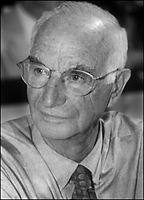
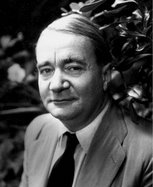
In a move that elegantly ties together many of the threads that have made up the last 20 years or so of my life, Robert Duncan dedicated one of the late poems in his Passages series, "Whose," as follows:
[for Jim Hillman's tribute to Henri Corbin The Thought of the Heart]
It was Hillman's 1979 Eranos lecture that first turned my attention, and that of many others I know, to Henry Corbin. In it he wrote,
"You who have been privileged at some time during his long life to have attended a lecture by Henry Corbin have been present at a manifestation of the thought of the heart. You have been witness to its creative imagination, its theophanic power of bringing the divine face into visibility. You will also know in your hearts that the communication of the thought of the heart proceeds in that fashion of which he was master, as a récit, an account of the imaginal life as a journey among imaginal essences, an account of the essential. In him imagination was utterly presence. One was in the presence of imagination itself, that imagination in which and by which the spirit moves from the heart towards all origination." - James Hillman, The Thought of the Heart and the Soul of the World. Dallas: Spring Publications, 1992, 3. For more on Hillman's debt to Corbin see Archetypal Psychology, Volume 1 of the Uniform Edition of Hillman's works.
Duncan's poem can be found on page 263 of Ground Work: Before the War, In the Dark. Those interested in Duncan's relation to Hillman should search out a copy of Duncan's remarkable lectures to the Analytical Psychology Society of Western New York transcribed for Spring Journal (1996): Spring 59: Opening the Dreamway: In the Psyche of Robert Duncan (out-of-print but worth searching for). The audio recoding of the second lecture can be found here as "Reading on "Wind and Sea, Fire and Night" at the American Psychoanalytic Society, 1980." The audio of the first lecture will be available on PennSound in the near future.
Thursday, September 29, 2011
Monday, September 26, 2011
Islamic Art at the Metropolitan Museum

Don't miss the videos with this article.
The new exhibit opens to the public November 1.
Thursday, September 22, 2011
Schiere di angeli iranici
Schiere di angeli iranici
Giulio Busi
Dal «grande angelo nero, fuligginoso» di Montale, a quello «vestito di panni d'un viola azzurro, cinto di cordoni d'oro, con vaste ali bianche dal fulgore di seta», che spicca il volo verso Franz Kafka, e fino agli angeli di Rilke, con «stanche bocche» e «anime senza contorni», gli esseri celesti si muovono attraverso il XX secolo furtivi e imprendibili, incuranti delle due guerre mondiali, delle ideologie, e della conclamata morte del divino. Raramente si occupano della Storia, perlopiù continuano il loro mestiere vecchio di millenni, messaggeri troppo umani del l'aldilà, aureolati d'inquietudine.
Ma forse nessun autore del secolo scorso ha saputo evocare l'antico mistero degli spiriti immateriali come Henry Corbin, filosofo e orientalista dalla prosa incalzante e ammaliatrice. Grazie a Corbin, nella cultura europea irrompe l'angeologia iranica. Richiamati in vita dalle antiche pagine dei magi zoroastriani o degli gnostici sciti, gli spiriti messi in scena da Corbin sorprendono il lettore occidentale con costumi e compiti in gran parte diversi da quelli dei loro colleghi biblici. Se nella tradizione ebraica i mal'akim, gli angeli, sono umili servitori del Dio trascendente, esecutori di ordini altrui, gli angeli venuti dall'Iran hanno dignità propria, sono principi conoscitivi, modelli di una compiutezza non solo sovrumana ma addirittura sovradivina.
Il repertorio angelico di Corbin si arricchisce ora di un inedito, tratto dall'archivio del grande studioso conservato a Parigi, e pubblicato nella raffinata traduzione di Raphael Ebgi. Le combat pour l'ange fu composto nel 1950, un anno dopo la stampa del Mito dell'eterno ritorno di Mircea Eliade. E in effetti, il testo corbiniano deve molto alla lezione di Eliade, e al concetto di sacro come liberazione dall'ansia della storia. Non importa, sostiene Corbin, che i dati storici e geografici su Zarathustra siano contraddittori e confusi, e che l'emergere dello zoroastrismo resti avvolto in un alone mitico. Quello che conta è riuscire a interpretare questi racconti come altrettante tappe di una «ierofania». La particolare ierofania zoroastriana si può riassumere, secondo Corbin, in un insegnamento fondamentale: ogni livello di essere ha un proprio angelo, ovvero è chiamato a un grado superiore di perfezione, ad angelicarsi nella luce della propria completezza. Una nostalgia di perfezione, venuta come i magi dal l'Oriente, che non poteva non affascinare il Novecento europeo.
© RIPRODUZIONE RISERVATA
Henry Corbin, Le Combat pour l'Ange (Ricerche sulla filosofia mazdea), a cura di Raphael Ebgi, Torre d'Ercole, Travagliato, pagg. 148, € 24,00
Tuesday, September 20, 2011
The Divine Twin in Late Antiquity
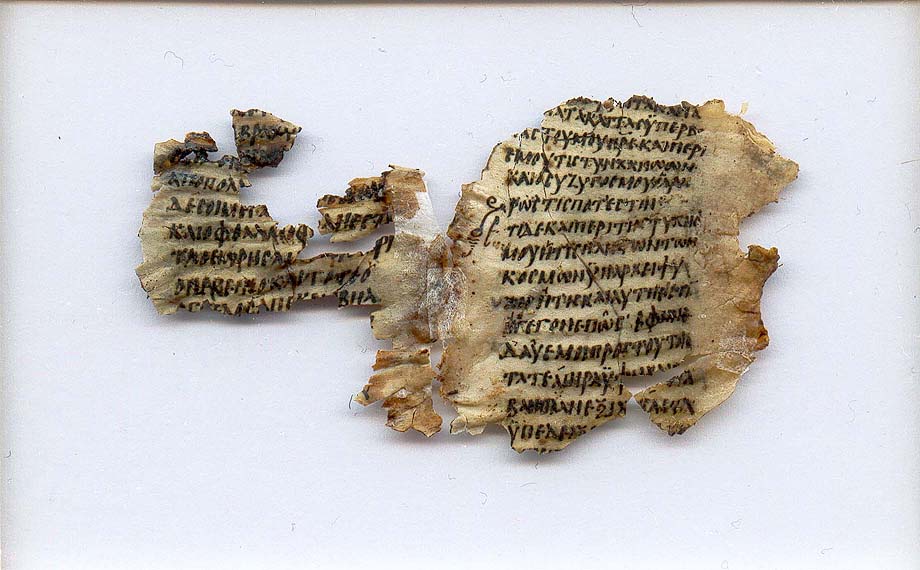
"A unus-ambo anthropology: The Divine Twin in the Gospel of Thomas, the Cologne Mani Codex, and Plotinus' Enneads," by Charles M. Stang , Asst. Professor of Early Christian Thought, Harvard Divinity School.
Dr. Stang writes, "A version of this essay was delivered at the 2010 Annual Meeting of the Society of Biblical Literature. It will appear in a forthcoming volume edited by Kimberley Patton, entitled Gemini and the Sacred: Twins in Religion and Myth (I.B Tauris). This essay is an attempt to sketch out the contours of a new research project on the theme of the divine twin or double, tentatively titled "When You Become Two: The Divine Twin in Late Antiquity." The book owes quite a bit to Corbin's opening two chapters of L'homme lumiere. It will have chapters devoted to the Gospel of Thomas, the Acts of Thomas, the Hymn of the Pearl, the Cologne Mani Codes (and other Manichean literature), and Plotinus. Perhaps other chapters on Plato (Phaedrus and Symposium) and Hermeticism."
Here are the opening paragraphs of Stang's essay:
In 1971, Henry Corbin published a short book by the title of L'homme de lumiere dans le soufisme
iranien. Ostensibly this book explores symbols of light in the writings of several medieval Persian
sufis, but Corbin begins with an exploration of "an innovation in philosophical anthropology" from
antiquity, a notion that "the individual person as such ... has a transcendent dimension at his
disposal," "a counterpart, a heavenly 'partner,' and that [the person's] total structure is that of a biunity,
a unus-ambo." Corbin traces this unus-ambo anthropology through a variety of sources from the
ancient Eastern Mediterranean up to and including the Iranian plateau. An unus-ambo anthropology
suggests that what it means to be properly human is not to be a single, integrated subject - to be
oneself, so to speak - but somehow to be one and two simultaneously. In several of the sources
Corbin considers, such an anthropology is figured as one's encounter with one's divine double or
twin. In other words, these sources imagine that only when one encounters one's divine double or
twin, only when one recognizes that one is and has always been two, does one (now a one-yet-two,
or unus-ambo) become a proper human self.
Among the sources to which Corbin turns is the small body of literature associated with the apostle Judas Thomas, who is said to have been the "twin" (didymus) of Christ - although what "twin" means in this context is unclear. Another source for him is Manichaean literature, wherein it is said that the prophet Mani was twice visited by his divine twin, heavenly companion or counterpart. Yet another is Plotinus' Enneads, where it is said that the self is divided between lower and higher halves. Corbin, I believe, is correct that there is a peculiar anthropology animating these three roughly contemporary corpora. Together these three offer a picture of human selfhood as being properly one and yet two, an anthropology according to which the inauguration of an intimate relationship with the divine is marked by an encounter with one's double or twin. All three offer an anthropology suspicious of simple singularity and easy integration, an alternative anthropology that relies on the figure of the twin to gesture at the baffling coexistence of singularity and duality. In what follows, I will explore this alternative, unus-ambo anthropology by an examination of selections from these three corpora...
[The Cologne Mani Codex reproduced here]
Subscribe to:
Posts (Atom)


 Posts


