Tuesday, May 1, 2018
Review of books on Scholem
THE HEDGEHOG REVIEW: VOL. 20 NO. 1 (SPRING 2018)
REVIEW OF
The Eternal Exile
Stranger in a Strange Land: Searching for Gershom Scholem and Jerusalem
George Prochnik
New York, NY: Other Press, 2017.
Gershom Scholem: An Intellectual Biography
Amir Engel
Chicago, IL: University of Chicago Press, 2017.
by
Nathan Goldman


Wednesday, April 25, 2018
Seven Types of Atheism

John Gray explores fixed idea, unquestioning atheism in his new book Seven Types of Atheism
THE IRISH TIMES
Tue, Apr 24, 2018, Patrick Freyne
John Gray is a self-described atheist who thinks that prominent advocates of atheism have made non-belief seem intolerant, uninspiring and dull. At the end of the first chapter of his new book, Seven Types of Atheism, he concludes that “the organised atheism of the present century is mostly a media phenomenon and best appreciated as a type of entertainment”.
He laughs when I remind him of this sick burn. “I wrote the book partly as a riposte to that kind of atheism,” he says. “There’s not much new in [new atheism] and what is in it is a tired recycled version of forms of atheism that were presented more interestingly in the 19th century. In the so-called new atheism people are [presented with] a binary option between atheism, as if there was only one kind, and religion, as if there was only one kind of religion. [It’s] historically illiterate.
“They don’t even know when they’re repeating ideas from the 19th or early 20th century . . .They don’t know anything of the history of atheism or religion. They’re also very parochial about religion. They take religion to be, not even monotheism or Christianity [but] contemporary American Protestant fundamentalism . . . It’s a parochial, dull debate. I thought of having a subtitle called Why the God Debate is Dead.”
In Seven Types of Atheism, Gray explores the rich philosophical history of non-belief and enlivens it with entertaining tales of humanists like August Comte who so believed in human co-operation he designed clothes that couldn’t be put on without assistance and “god-haters” like the Marquis de Sade whose life was lived in debased defiance of the divine. READ MORE
Friday, April 20, 2018
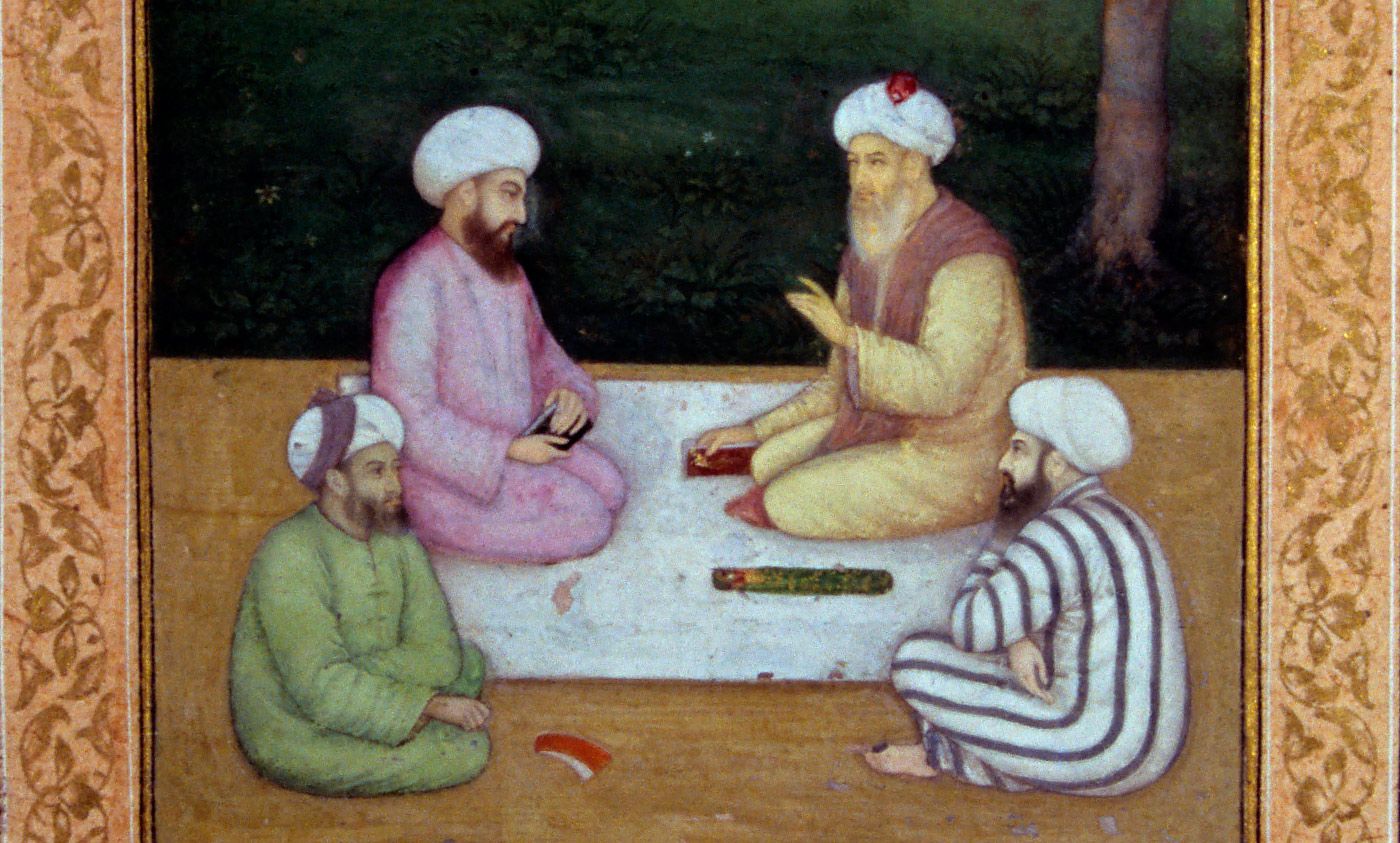
Every Sufi master is, in a sense, a Freudian psychotherapist

University of California, Davis.
Her latest book is
The Arabic Freud: Psychoanalysis and Islam in Modern Egypt
Even in the most revolutionary thinkers, you will find the uncannily familiar. Sigmund Freud was no exception. Arabs recognised in Freud’s body of thought ideas from classical Islamic thinkers. In the 1940s and ’50s, when intellectuals translated Freud’s work into Arabic, they reached out to Ibn Arabi, the great 12th-13th-century Sufi mystic philosopher. The Egyptian playwright and novelist Tawfiq al-Hakim dates the impulse to blend traditions as far back as Alexander’s conquest of Syria and the eventual translation of philosophical works from Greek to Syriac.
Under Roman rule, Egypt was a centre of learning and part of a shared classical intellectual world, which included Alexandria as much as it did Athens and Rome. Subsequently, Greek philosophy, and particularly the works of Plato and Aristotle, had been energetically translated into Arabic throughout the early Islamic period, contributing to the vitality of Hellenic philosophy. For al-Hakim, Greek ideas were poured into the mould of Islamic philosophy. This process was also evident in al-Hakim’s own work combining Greek tragedy and Islamic legends, in order to effect what he called an ‘intermarriage between two literatures and two mentalities’. It is not at all surprising, then, given this tendency to draw on shared traditions, that Arab intellectuals turned to a mystical Islamic vocabulary when translating Freud in the middle of the 20th century.
This includes the nice detail that Lacan knew of Ibn 'Arabi through reading Corbin.
Thursday, April 19, 2018
Shayegan: Trials and Tribulations of an Iranian Philosopher


London - Amir Taheri
“We had one life, after all,” said the Daryush Shayegan as he sipped his double espresso as if it were the nectar of gods. “The question is: what did we do with it?”
The scene was a just over a year ago in a café in Paris’ posh Avenue Alma Marceau where we had gathered for lunch with a mutual friend, Professor Shahin Fatemi. At the time none of us knew that Daryush was on his last visit to the French capital which he had always regarded as a second home and that, a year later, he would pass away in his first home, his beloved Tehran.
Last Monday, a small group of mourners attended the burial ceremony in Tehran of the 83-year old Daryush under the watchful eyes of “Islamic Security” deployed to make sure there will be no “disturbances.”
The answer to Shayegan’s question, “what did we do with our life”, is both simple and complex in his case.
He has been described as polymath, philosopher, poet, mystic, linguist, and master in “Eastern” civilizations, whatever that means. But he had also dabbled in literary criticism, historic research, and, theological speculation. Moreover, he was also a keen collector and connoisseur of objects of art, books, and calligraphy.
Perhaps as a side-line, he had also dabbled in grand political strategy by promoting the concept of “a dialogue of civilization” which was first adopted by Empress Farah and, after the mullahs seized power in Tehran, Hojat al-Islam Muhammad Khatami who served as President of the Islamic Republic for eight years.
However, those who knew him best remember him for his passionate love of Iran, almost bordering on idolatry, and what he described as his lifelong love affair with the Persian language.
Thursday, March 29, 2018
Knowledge and Power in the Philosophies of Ḥamīd al-Dīn Kirmānī and Mullā Ṣadrā Shīrāzī
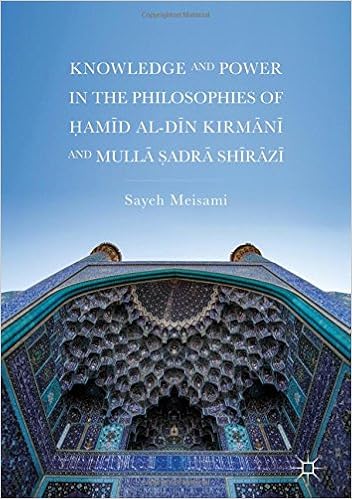
Knowledge and Power in the Philosophies of Ḥamīd al-Dīn Kirmānī
and Mullā Ṣadrā

by Sayeh Meisami
on amazon
Springer Description
This book is a comparative study of two major Shīʿī thinkers Ḥamīd al-Dīn Kirmānī from the Fatimid Egypt and Mullā Ṣadrā from the Safavid Iran, demonstrating the mutual empowerment of discourses on knowledge formation and religio-political authority in certain Ismaʿili and Twelver contexts. The book investigates concepts, narratives, and arguments that have contributed to the generation and development of the discourse on the absolute authority of the imam and his representatives. To demonstrate this, key passages from primary texts in Arabic and Persian are translated and closely analyzed to highlight the synthesis of philosophical, Sufi, theological, and scriptural discourses. The book also discusses the discursive influence of Naṣīr al-Dīn Ṭūsī as a key to the transmission of Ismaʿili narratives of knowledge and authority to later Shīʿī philosophy and its continuation to modern and contemporary times particularly in the narrative of the guardianship of the jurist in the Islamic Republic of Iran.
Tuesday, March 27, 2018
Doors to the Imaginal
Doors to the Imaginal: Implications of Sunni Islam’s Persecution of the Ahmadi “Heresy”
Religions 2018, 9(4), 91

New Social Research Programme & Faculty of Social Sciences,
University of Tampere, 33014 Tampere, Finland
Keywords: Ahmadiyyat; heresy; Islam; Persianate; Sufi; imaginal; theosophy
Sunday, March 25, 2018
Dariush Shayegan 1935-2018

His latest work in Persian ‘Five Realms of Being’,
featuring his views about five legendary Persian
poets and mystics Khayyam Nishaburi, Ferdowsi,
Molavi (Rumi), Sa’di and Hafez was released in 2014.
“I am not a philosopher, I am a free thinker.”
Tuesday, March 13, 2018
Two fascinating books on art & architecture and imagination
Hooman Koliji draws extensively on Corbin's work.
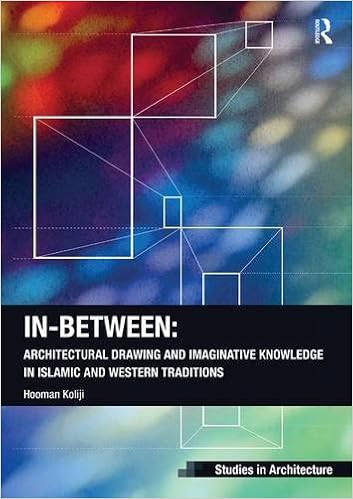
In-between:
Architectural Drawing and Imaginative Knowledge in Islamic and Western Traditions
Koliji, Hooman 2014.
"Contemporary technical architectural drawings, in establishing a direct relationship between the drawing and its object, tend to privilege the visible physical world at the expense of the invisible intangible ideas and concepts, including that of the designer’s imagination. As a result, drawing may become a utilitarian tool for documentation, devoid of any meaningful value in terms of a kind of knowledge that could potentially link the visible and invisible. This book argues that design drawings should be recognized as intermediaries, mediating between the world of ideas and the world of things, spanning the intangible and tangible. The notion of the 'Imaginal' as an intermediary between the invisible and visible is discussed, showing how architectural drawings lend themselves to this notion by performing as creative agents contributing not only to the physical world but also penetrating the realm of concepts. The book argues that this 'in-between' quality to architectural drawing is essential and that it is critical to perceive drawings as subtle bodies that hold physical attributes (for example, form, proportion, color), highly evocative, yet with no matter. Focusing on Islamic geometric architectural drawings, both historical and contemporary, it draws on key philosophical and conceptual notions of imagination from the Islamic tradition as these relate to the creative act. In doing so, this book not only makes important insights into the design process and act of architectural representation, but more broadly it adds to debates on philosophies of the imagination, linking both Western and Islamic traditions."\
'Enquiring into the nature of the creative imagination, this book provides a clear alternative to the well-worn dualistic struggle between rationality and subjective aesthetics. Koliji makes a valuable contribution to the historical study of Islamic architecture, and further reveals an innovative way of approaching artworks through the viewpoint of the designer's imagination that has broad relevance to anyone interested in understanding the process of invention.' Paul Emmons, Virginia Tech, USA 'This book reinforces the novel directions in research that transcend the gaps in historical sources on art and architecture in the pre-modern Muslim milieu by engagingly intersecting the pathways of architectural humanities with Islamic studies in mainstream theory and discourse.' Nader El-Bizri, American University of Beirut, Lebanon
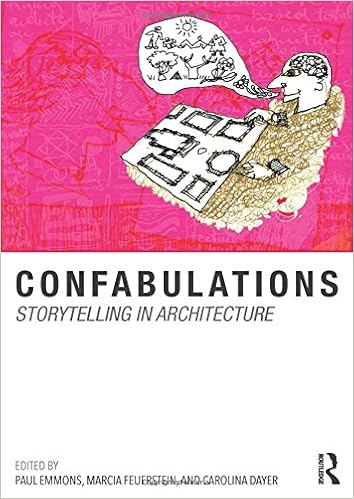
Confabulations : Storytelling in Architecture
by Paul Emmons, Marcia F. Feuerstein , Carolina Dayer
Tuesday, February 27, 2018
Buddhism & Islam

History professor and author Johan Elverskog discusses the prevalent but false narrative that Muslim invaders destroyed Buddhism in India.
Friday, February 23, 2018
Forough Farrokhzad - 1934-1967
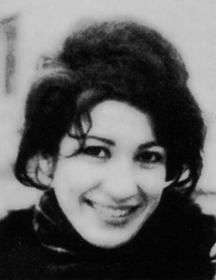
Here is a poem by Forough Farrokhzad in a very fine translation. She is almost unknown in English and her major works are untranslated. Someone should remedy that.
The Bird is Mortal
I feel heavy-hearted
I feel heavy-hearted
I go to the terrace and
I draw my fingers upon the drawn skin of the night,
The lamps of relation are dark
The lamps of relation are dark
Nobody will introduce me
to the sun,
Nobody will take me to the sparrows' party
Remember the flight
The bird is mortal
(translation by Farshad Fouladinejad - I am grateful to him for sending me this, and the knowledge of her work).
Tuesday, January 30, 2018
An interesting new essay from Russia
Understanding Imagination: Towards a New Humanitarian Paradigm
ALEKSANDR SAUTKIN
Murmansk Arctic State University, Russia
Key words: imagination, image, sensual world, anthropological traject, mundus imaginalis.
Summary
The article deals with the problem of imagination interpreted in a broad historical and philosophical
perspective. It is shown that European metaphysics have for a long time neglected imagination in favour of reason. In contrast to this position, the necessity of considering imagination in a new way is postulated – as a leading creative force of the human being. In this connection, the ideas of Henri Corbin and Gilbert Durand are analysed as a possible source of new ways of humanitarian discourse.
PDF HERE
Friday, January 26, 2018
Recent Work by Mohammed Rustom
MOHAMMED RUSTOM in Renovatio 1.1 - Feature Article
By Mohammed Rustom - Sacred Web 39
And in two recent books of interest:

Sebastian Günther and Todd Lawson (eds):
Roads to Paradise: Eschatology and Concepts of the Hereafter in Islam.
(Islamic History and Civilization: Studies and Texts.)
2 vols. xliv, 1493 pp.
Leiden: Brill, 2017.
M. Rustom

Taylor, Richard C., and Luis Xavier López Farjeat (eds.).
The Routledge Companion to Islamic Philosophy.
London: Routledge, 2016.
Mohammed Rustom
Dr. Mohammed Rustom
Associate Professor
College of the Humanities
Carleton University
Thursday, January 25, 2018
Jihad, Radicalism, and the New Atheism
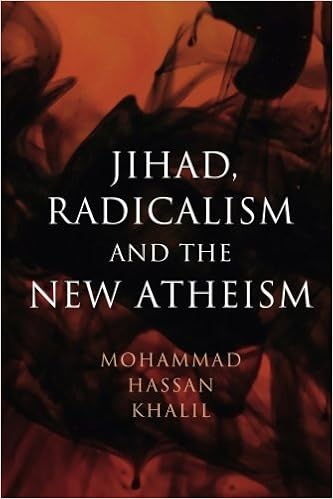
Jihad, Radicalism, and the New Atheism
Mohammad Hassan Khalil
"One of this book's key insights is that liberalism can also be rather fundamentalistic in its scope and approach, and that the so-called New Atheists such as Sam Harris have even more violent and radical readings of the Quran than the jihadis themselves. Thus, the author argues, there are very few real differences in extremes when we look at the discourses of radical liberals/New Atheists and those of the jihadis. This is reminiscent of a point made by Seyyed Hossein Nasr in his book written in 1987, Traditional Islam in the Modern World (re-issued in 2010 as Islam in the Modern World). There, Nasr shows how modernism (liberalism being modernism's logical extension) and fundamentalism are two sides of the same coin, sharing in common, among other things, the rejection of tradition." - Mohammed Rustom, Associate Professor, College of the Humanities,Carleton University
"Mohammad Khalil's critique of the "new atheists" is compelling, rational, and hard-hitting without veering into polemics. The result is a highly lucid, carefully argued and engaging book on a very timely topic that has been begging for such a level-headed, scholarly treatment." - Asma Afsaruddin, Professor of Near Eastern Languages & Cultures, Indiana University
"...[N]o work has to this point looked at jihadist discourses on war and New Atheist discourses on Islam together as a shared narrative around what it means to be genuinely motivated by religion in modern Islam. Mohammad Khalil's book does just that, and it should be required reading for anyone looking for a way out of the Manicheanism of both jihadism and certain kinds of anti-religious discourse." - Andrew F. March, Law and Social Change Fellow, Islamic Legal Studies Program, Harvard Law School
Tuesday, January 23, 2018

Monday, January 22, 2018

Subscribe to:
Posts (Atom)


 Posts
Posts


