Friday, March 7, 2014


Friday, February 28, 2014

Thursday, February 20, 2014
Henry Corbin and Russian Religious Thought by Hadi Fakhoury
I am excited and delighted to be able to present here the full text of Hadi Fakhoury's master's thesis. It is a remarkable piece of scholarship and an immensely important contribution to our understanding of Corbin's thought. It is truly essential reading for everyone with an interest in Corbin's work. I came away from it with a far deeper grasp of what Corbin was up to and of the origins and the development of his thought. I look forward to the publication of this superb work and to whatever comes next from Fakhoury's powerful pen.
Henry Corbin and Russian Religious Thought
Hadi Fakhoury
Institute of Islamic Studies
McGill University, Montreal
Monday, February 3, 2014
Hafez on PBS
Friday, January 31, 2014

Thursday, January 30, 2014
Wednesday, January 29, 2014
Eranos: An Alternative Intellectual History of the Twentieth Century

Hakl, Hans Thomas.
Sheffield: Equinox, 2013
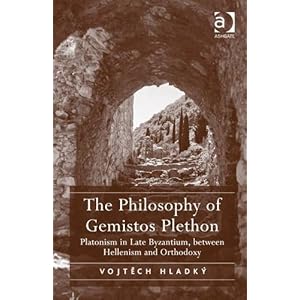
Tuesday, January 14, 2014
Advance Notice of an Important Publication

ERANOS—ITS MAGICAL PAST AND ALLURING FUTURE:
THE SPIRIT OF A WONDROUS PLACE
Spring: A Journal of Archetype and Culture, Vol. 92
Publication Date: Winter 2014
Editor-in-Chief, Nancy Cater, J.D., Ph.D.
Guest Editor: Riccardo Bernardini, Scientific Secretary, Eranos Foundation
Tuesday, January 7, 2014
On Platonic Theology
The Rebirth of Platonic Theology: Proceedings of the Conference Held at the Harvard University Center for Italian Renaissance Studies (Villa I Tatti) and the Istitutio Nazionale di Studi sul Rinascimento (Florence, 26-27 April 2007) for J. B. Michael Allen, ed. James Hankins and Fabrizio Meroi (Firenze: Olschki, 2013)
The Rebirth of Platonic Theology: Proceedings of the Conference Held at the Harvard University Center for I... by Tom Cheetham
Thursday, January 2, 2014
Conférences publiques 2014
"Liberté et contrainte dans les sociétés musulmanes"
Christian Jambet, directeur d’études, EPHE
La liberté spirituelle en islam et l’interprétation de “Pas de contrainte en religion”
"Liberté et contrainte dans les sociétés musulmanes"
Christian Jambet, directeur d’études, EPHE
La liberté spirituelle en islam et l’interprétation de “Pas de contrainte en religion”
Mardi 7 janvier 2014
18h-20h
Amphithéâtre François Furet, 105 bd Raspail, 75006 Paris (M° Saint-Placide ou Notre-Dame-des-champs)
Entrée libre
Dans l’esprit et la lettre des théologies majoritaires en islam, la liberté de l’homme est inséparable de la Loi et du décret divin. On montrera que les formes de la liberté consistent non à s’abstraire de l’ordre divin intégral, mais à se rendre, en quelque façon, semblable à Celui qui l’instaure, par une démarche intérieure et spirituelle. On prendra l’exemple de l’interprétation de la phrase fameuse, présente dans le Coran (2, 256), “Pas de contrainte en religion”, par le grand philosophe Mullâ Sadrâ, et l’on s’interrogera sur le sens, pour le destin de l’islam, de la distinction entre une liberté intérieure, perfection de l’âme, et une liberté extérieure à la Loi, jugée illicite ou illusoire.
Modérateur : Bernard Heyberger, directeur d’études EHESS, directeur de l’IISMM-EHESS

Saturday, November 30, 2013
Tuesday, November 19, 2013
The Habit of Mysticism
Ibn Tufayl, Avicenna & Hayy Ibn Yaqzan discussed in
Getting Used to God: Augustinian and
Avicennian Approaches to the Habit of
Mysticism
Daniel J. Gillis
Monday, November 18, 2013

‘In the Karbala of his heart, it may happen that the powers of the carnal soul kill the intellect and the angelic companions who assist it, and uproot all traces of them from man’s heart. Then indeed there is accomplished in each one of us, word for word, the ta’wīl of the tragedy of Karbala.” - Henry Corbin, (Temple and Contemplation, 46) See the essay in Isma'ili Gnosis HERE.
Thursday, November 14, 2013
James Hillman Celebration in Dallas
| |||||||||||||||||
| |||||||||||||||||


Subscribe to:
Posts (Atom)


 Posts
Posts

