Wednesday, July 29, 2015
Corbin & American Poetry: Ken Irby

As I hope I have mentioned here in the past Ken Irby is one of the many poets influenced by Corbin. Here is a footnote from an essay by Robert Bertholf in the Jacket2 issue on Irby:
In an article, Peter Bertollette cites Henry Corbin’s books Spiritual Body and Celestial Earth andCyclical Time in Mazdaism and Ismailism in support of a very useful comment about Irby’s idea of home: Irby’s use of homeplace and “the heartland” “fits in with Corbin’s notion that the home is an organ of perception, where the heart lies, a place to be planted in, and shoot forth from.” See Peter Bertollette, “Ken Irby,” Credences 7 (February 1979): 28, and Henry Corbin, Spiritual Body and Celestial Earth: From Mazdean Iran to Shi’ite Iran, trans. Nancy Pearson, Bollingen Series XCI:2 (Princeton: Princeton University Press, 1977). Don Byrd also adds a fine perception about Irby’s idea of home: “To make a play stay put by knowing what its uses is what Irby means by making a home.” Don Byrd, “Ken Irby and the Missouri-Kansas Border,” Credences 7 (February 1979): 9.


Monday, June 22, 2015
NEW! The Spring Journal Issue on Eranos
Spring, A Journal of Archetype and Culture, Vol. 92, Spring 2015
Spring, founded in 1941, is the oldest Jungian psychology journal in the world. Published twice a year, each issue explores from the perspective of depth psychology a theme of contemporary relevance and contains articles as well as book and film reviews. Contributors include Jungian analysts, scholars from a wide variety of disciplines, and cultural commentators.
| ||||||||||||||||||||||||||||||||||||||||||||||||||||||||||||||||||||||||||||||||||||||||||||||||||||

Eranos – Its Magical Past and Alluring Future: The Spirit of a Wondrous Place
Spring, A Journal of Archetype and Culture, Vol. 92, Spring 2015
Editor-in-Chief: Nancy Cater
Guest Editor: Riccardo Bernardini
ISBN: 978-1-935528-69-2
500 pp.
Price: $32.95
More than eighty years have passed since the founding of Eranos by Fröbe-Kapteyn in 1933 in Ascona, Switzerland. The Eranos Conferences, a pioneering endeavor of interdisciplinary presentations and dialogues, have been properly recognized as “one of the most creative cultural experiences in the modern Western world” and “one of the richest centers of intellectual and spiritual interchange known to our century.” Eranos’ influence has been documented in a number of fields of knowledge, ranging from psychology to the history of religions, from philosophy to Eastern studies, from theology to anthropology, from biology to physics.
Spring has had a longing-standing connection to Eranos, and has published through the decades articles by many of the key figures who presented at the Eranos conferences: C. G. Jung, Karl Kerényi, Mircea Eliade, Heinrich Zimmer, Erich Neumann, Henry Corbin, Gilbert Durand, James Hillman, David Miller, and Wolfgang Giegerich, among others. This Eranos issue of Spring focuses on Eranos’s history, cultural heritage, and future perspectives. It gathers a series of contributions by renowned specialists, together with a series of essays by great authors of the past, whose gratitude to Eranos is testified to in their writings. Historical essays re-published here are by Carl Gustav Jung, Henry Corbin, Mircea Eliade, Adolf Portmann, and Rudolf Ritsema. We are also honored to publish for the first time an article by the founder of Eranos, Olga Fröbe-Kapteyn, entitled The Psychological Background of Eranos (1939), originally presented at the Analytical Psychology Club in New York. In addition more than fifty previously unpublished photographs from the Eranos Archives have been made available toSpring through the Eranos Foundation for this celebratory volume. We hope you enjoy learning more about Eranos—past, present, and future! | ||||||||||||||||||||||||||||||||||||||||||||||||||||||||||||||||||||||||||||||||||||||||||||||||||||
| ***** | ||||||||||||||||||||||||||||||||||||||||||||||||||||||||||||||||||||||||||||||||||||||||||||||||||||
| ||||||||||||||||||||||||||||||||||||||||||||||||||||||||||||||||||||||||||||||||||||||||||||||||||||
Wednesday, May 20, 2015
The Final Book in the Corbin Series

IMAGINAL LOVE
The Meanings of Imagination
in Henry Corbin & James Hillman
in Henry Corbin & James Hillman
I will not forget this book. It has subtly but, I suspect, permanently shifted the way I look at reality, the way I listen to language. - Cynthia Bourgeault, retreat leader and author of The Wisdom Way of Knowing, The Holy Trinity and the Law of Three, and Mystical Hope.
Imaginal Love is a work of vital imagination, at once personal, formally audacious, penetrating, and richly insightful. Beginning with the premise of the inherent and initiatic complexity of Henry Corbin’s thought, and building on the intricately laid foundation of the four previous volumes in his Corbin Quartet, Tom Cheetham brings his considerable learning and experience to bear on a dynamic, psychocosmological reading of Corbin’s mighty influence on the work of archetypal psychologist James Hillman, and those modern and contemporary poets, including Robert Duncan and Charles Olson, some of whose works have been guided significantly by Hillman’s ideas. For anyone interested in the overlapping open fields of depth psychology and Projective Verse, Imaginal Love is essential. - Peter O’Leary, poet and author of The Phosphorescence of Thought, and Gnostic Contagion: Robert Duncan and the Poetry of Illness
Imaginal Love radically reframes the ancient question of the nature of love, in particular as a path for a consciously realized life. Tom Cheetham drives passionately, sympathetically, and lucidly between the intertwined yet critically antithetical paths of Henry Corbin, the great mystical French exegete of Sufi “psychocosmology,” and James Hillman, the great American heretical transformer of Jungian psychology. And he does it by way of his long personal journey, showing that any realization of “imaginal love” can only happen within the person, actual singular being. At the same time he profoundly engages the paradox that such intensively lived singularity is also the site of non-limiting multiplicity and visionary openness. It’s a vision as well of a higher function of language, implicitly a poetics of alchemical intensity, yet which can only occur within the deepening process of life itself.
- George Quasha, poet and author most recently of Axial Stones: An Art of Precarious Balance and The Daimon of the Moment.
Tom Cheetham shows the heights that independent scholars outside academia can achieve. His prior work has virtually defined independent scholarship on Henry Corbin. In Imaginal Love, he has turned his gifts to "the meanings of imagination in James Hillman and Henry Corbin." The result is a powerful contribution to our understanding of the full meaning of imaginal love -- and the central role of such love in human life. - Michael Lerner, President, Commonweal.
The text is studded with breath-taking virtuoso passages, as when Cheetham feels his way through the nuances of relationship with the Angel, the Face of the Divine that is individual to each of us; or the shattering experience and alchemical transmutation of, autonomous ‘feeling-toned complexes.’ After such passages you just want to stand up and cheer. (full review) - Belinda Hunt, Artist and Writer, Winchester, UK
Tom Cheetham shows the heights that independent scholars outside academia can achieve. His prior work has virtually defined independent scholarship on Henry Corbin. In Imaginal Love, he has turned his gifts to "the meanings of imagination in James Hillman and Henry Corbin." The result is a powerful contribution to our understanding of the full meaning of imaginal love -- and the central role of such love in human life. - Michael Lerner, President, Commonweal.
The text is studded with breath-taking virtuoso passages, as when Cheetham feels his way through the nuances of relationship with the Angel, the Face of the Divine that is individual to each of us; or the shattering experience and alchemical transmutation of, autonomous ‘feeling-toned complexes.’ After such passages you just want to stand up and cheer. (full review) - Belinda Hunt, Artist and Writer, Winchester, UK
Sunday, May 17, 2015
Boundary Violations - Poems from Tom Cheetham

Shipping Now from
It doesn’t get any more honest than this. Tom Cheetham, long known for his dedicated and engaged scholarship on Henry Corbin, here reveals another side to his lively intelligence. The poems in Boundary Violations address us to the ordinary that Emerson proposed as America’s gift to the world. Sitting at the feet of the familiar, the low, Cheetham finds himself face to face with wonder and generously leads us into its glow. - Michael Boughn
Coming from a rogue scholar of the imagination in esoteric Islam, a book of poems should be of no surprise, but this one sure is. Tom Cheetham plunges us deep into the imaginative realities of a life as far from Mecca as Maine. By turns ludic, dark, elegant, honest, with an enviable sense of the absurd, and with generosity towards existence, Cheetham is ever faithful to the turns of thought and feeling, interleaving the planes of the real into his continuous and wonderfully whacked-out song. - Joseph Donahue
There is a madcap intelligence at work in these poems, an intelligence that has given itself permission to go as far as it can. Tom Cheetham calls his book Boundary Violations (the boundaries of the voice, of the poetic line, of standard poetic discourse, of literary propriety…), but it could also be said that here, all poetic boundaries have been entirely dissolved. Charles Olson meets Mrs. Tiggy-Winkle meets Rocky the Flying Squirrel. But like other poets who insist on violating boundaries (think: Rimbaud; think: Frank O’Hara), Cheetham is absolutely serious and playing for keeps (OK, maybe not absolutely serious). In any case, I encourage you to join him in observing “the mysterious energies of life exploding off the pages…” - Norman Finkelstein
Monday, April 6, 2015
Corbin & Russian Religious Thought (cont'd)
Last year I posted Hadi Fakhoury's wonderful thesis Henry Corbin and Russian Religious Thought (see this post). It is being published in two parts in the journal Dionysus. Part one is available in Dionysus XXXII, 173-218. The thesis has been revised and updated (with exclusive materials from the Corbin archives in Paris) and is a must read for all students of Corbin. The second part will appear in the next issue. Don't miss either!
Friday, April 3, 2015

Wednesday, March 25, 2015
Back in Print! The World Turned Inside Out

From the reviews:
A deep reading of Tom Cheetham's The World Turned Inside Out could have the effect of turning the reader inside out! Not only will a person discover in this book a thorough understanding of the remarkable and important vision of Henry Corbin, the great French scholar of Iranian Islam. The reader will also be engaged by a politically useful understanding of the religion of Islam generally, of mystical and negative theology, of monotheism, of the philosophy of imagination, of language and the textures of textuality, and of the nature of reading and thinking. Among other things, a careful reading of this book can inform current interpretations of the politics of terrorism, its wars and the wars against it. In short, there exists here a shaking of the foundations of human perspectives that comes to nothing short of a radical revisioning of all attempts to make sense of the life and meaning of being in the world. - David L. Miller, Watson-Ledden Professor of Religion, Emeritus, Syracuse University, Core Faculty Member, Pacifica Graduate Institute, Author of Christs, Three Faces of God & Hells and Holy Ghosts.
A remarkable creative synthesis of the genius of Henry Corbin, the silent precursor of archetypal psychology. Tom Cheetham gives the gift of a metaphysics of interiority balancing pervasive, destructive, suffocating, spectator consciousness. And it is a convivial interiority, filled with spiritual presences. The soul can breathe again because it has found its homeland, the Soul of the World. - Robert Sardello, author of Freeing the Soul from Fear
This book does an absolutely splendid job of opening up Corbin's thought to the general reader. Corbin's work addresses our contemporary situation in a most direct way as this book shows, and the author has made an important contribution to both the philosophy of religion and the history of religions. This is an interesting, careful and important piece of work that I hope will gain the recognition that it deserves. - Charles J. Adams, Emeritus Professor of Islamic Studies, McGill University
Saturday, February 28, 2015

Thursday, February 19, 2015
Corbin & American Poetry - The Continuing Series
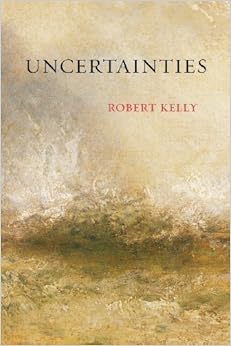
As readers of this blog will know Robert Kelly, George Quasha and Charles Stein are among the most important poets to have been explicit about the influence of Henry Corbin on their work. George Quasha and Charles Stein published Ta'wil or, How to Read in conjunction with Kelly in 1973.
Kelly has written:
A fundamental exercise in ta’wil is to study what happens to you when you write the world down. When you say it aloud. / How does the world change when the word is made? / A poem is the ta’wil of the first word written down. / The intercourse of sound and sense is trivial on ay analytical level. It means in a different way. I mean it means in a different world. / It is the other side of the consensus. - Kelly, A Voice Full of Cities, 2014, 284.
I am delighted to have the author's pemission to present here a link to a remarkable essay by George Quasha on Kelly's book of poetry Uncertainties.
by
To be published in the companion volume to A Voice Full of Cities
titled A City Full of Voices, due out this year.
Monday, January 5, 2015
A New Post from Ismaili Gnosis
with multiple excerpts from Corbin's Temple & Contemplation:

"Consider the cubic form of the Temple, which totalizes and interconnects spiritual and material realities, as a unique Emanation proceeding from the supreme Principle; that is to say, as a human person, as the Anthropos who is God’s Vicar with regard to what he envelops and contains eminently within himself. In other words, the figuration of the Temple of the Ka‘bah is likewise the figuration of Shiite prophetology and Imamology, because in both cases the same functional relationships are preserved."
Henry Corbin,
(Temple and Contemplation, 219)
Friday, January 2, 2015
2014%20by%20Star%20Black05.jpg)
Saturday, December 20, 2014

Monday, December 15, 2014
Asian Art News Press Release
PRESS RELEASE
Freer and Sackler Galleries to Release
Complete Digitized Collection Jan. 1, 2015
More Than 40,000 Masterpieces of Asian and American Art Available for
Free Public Use
Dec. 15, 2014
The Freer Gallery of Art and Arthur M. Sackler Gallery, the Smithsonian’s museums of Asian art, will
release their entire collections online Jan. 1, 2015, providing unprecedented access to one of the
world’s most important holdings of Asian and American art. The vast majority of the 40,000 artworks
have never before been seen by the public, and more than 90 percent of the images will be in high
resolution and without copyright restrictions for noncommercial use.
The Freer and Sackler galleries are the first Smithsonian and the only Asian art museums to digitize
and release their entire collections, and in so doing join just a handful of museums in the U.S.
“We’re poised at a digital tipping point, and the nature of what it means to be a museum is
changing,” said Julian Raby, the Dame Jillian Sackler Director of the Arthur M. Sackler Gallery and
Freer Gallery of Art. “We strive to promote the love and study of Asian art, and the best way we can
do so is to free our unmatched resources to inspire appreciation, academic study and artistic
creation.”
In the initial release, each work will be represented by one or more stunningly detailed images at the
highest possible resolution, with complex items such as albums and manuscripts showing the most
important pages. In addition, some of the most popular images will also be available for download
as free computer, smartphone and social media backgrounds. Future iterations plan to offer
additional functionality like sharing, curation and community-based research.
“The depth of the data we’re releasing illuminates each object’s unique history, from its original
creator to how it arrived at the Smithsonian,” said Courtney O’Callaghan, director of digital media
and technology at the Freer and Sackler galleries. “Now, a new generation can not only appreciate
these works on their own terms, but remix this content in ways we have yet to imagine.”
Freer and Sackler Galleries to Release
Complete Digitized Collection Jan. 1, 2015
More Than 40,000 Masterpieces of Asian and American Art Available for
Free Public Use
Dec. 15, 2014
The Freer Gallery of Art and Arthur M. Sackler Gallery, the Smithsonian’s museums of Asian art, will
release their entire collections online Jan. 1, 2015, providing unprecedented access to one of the
world’s most important holdings of Asian and American art. The vast majority of the 40,000 artworks
have never before been seen by the public, and more than 90 percent of the images will be in high
resolution and without copyright restrictions for noncommercial use.
The Freer and Sackler galleries are the first Smithsonian and the only Asian art museums to digitize
and release their entire collections, and in so doing join just a handful of museums in the U.S.
“We’re poised at a digital tipping point, and the nature of what it means to be a museum is
changing,” said Julian Raby, the Dame Jillian Sackler Director of the Arthur M. Sackler Gallery and
Freer Gallery of Art. “We strive to promote the love and study of Asian art, and the best way we can
do so is to free our unmatched resources to inspire appreciation, academic study and artistic
creation.”
In the initial release, each work will be represented by one or more stunningly detailed images at the
highest possible resolution, with complex items such as albums and manuscripts showing the most
important pages. In addition, some of the most popular images will also be available for download
as free computer, smartphone and social media backgrounds. Future iterations plan to offer
additional functionality like sharing, curation and community-based research.
“The depth of the data we’re releasing illuminates each object’s unique history, from its original
creator to how it arrived at the Smithsonian,” said Courtney O’Callaghan, director of digital media
and technology at the Freer and Sackler galleries. “Now, a new generation can not only appreciate
these works on their own terms, but remix this content in ways we have yet to imagine.”
Sunday, December 7, 2014

Wednesday, November 12, 2014

Subscribe to:
Posts (Atom)


 Posts
Posts

