"...the Imagination (or love, or sympathy, or any other sentiment) induces knowledge, and knowledge of an 'object' which is proper to it..."
Henry Corbin (1903-1978) was a scholar, philosopher and theologian. He was a champion of the transformative power of the Imagination and of the transcendent reality of the individual in a world threatened by totalitarianisms of all kinds. One of the 20th century’s most prolific scholars of Islamic mysticism, Corbin was Professor of Islam & Islamic Philosophy at the Sorbonne in Paris and at the University of Teheran. He was a major figure at the Eranos Conferences in Switzerland. He introduced the concept of the mundus imaginalis into contemporary thought. His work has provided a foundation for archetypal psychology as developed by James Hillman and influenced countless poets and artists worldwide. But Corbin’s central project was to provide a framework for understanding the unity of the religions of the Book: Judaism, Christianity and Islam. His great work Alone with the Alone: Creative Imagination in the Sufism of Ibn ‘Arabi is a classic initiatory text of visionary spirituality that transcends the tragic divisions among the three great monotheisms. Corbin’s life was devoted to the struggle to free the religious imagination from fundamentalisms of every kind. His work marks a watershed in our understanding of the religions of the West and makes a profound contribution to the study of the place of the imagination in human life.Search The Legacy of Henry Corbin: Over 800 Posts
Wednesday, July 27, 2011
Tuesday, July 19, 2011
Cusanus & Eriugena
Though not too closely linked to Corbin, I think it's worth posting a note about a book that will be of interest to some readers & that might otherwise slip under the radar:
The proceedings from the 2009 Eriugena-Cusanus conference in Lublin.
A very interesting Table of Contents.
Painting of Nicolas here.
The proceedings from the 2009 Eriugena-Cusanus conference in Lublin.
A very interesting Table of Contents.
Painting of Nicolas here.
Sunday, July 17, 2011
Corbin & L'Herne
Publiés à L'Herne :
Cahier Henry Corbin
Le Paradoxe du Monothéisme (Essais)
Le Livre des sept Statues (Essais)
L'Imam Caché (Essais)
Cahier Henry Corbin
Le Paradoxe du Monothéisme (Essais)
Le Livre des sept Statues (Essais)
L'Imam Caché (Essais)
Friday, July 15, 2011
Esotericism and the Academy: Rejected Knowledge in Western Culture
Wouter J. Hanegraaff, University of Amsterdam
Cambridge University Press - January 2012
"Academics tend to look on 'esoteric', 'occult' or 'magical' beliefs with contempt, but are usually ignorant about the religious and philosophical traditions to which these terms refer, or their relevance to intellectual history. Wouter Hanegraaff tells the neglected story of how intellectuals since the Renaissance have tried to come to terms with a cluster of 'pagan' ideas from late antiquity that challenged the foundations of biblical religion and Greek rationality. Expelled from the academy on the basis of Protestant and Enlightenment polemics, these traditions have come to be perceived as the Other by which academics define their identity to the present day. Hanegraaff grounds his discussion in a meticulous study of primary and secondary sources, taking the reader on an exciting intellectual voyage from the fifteenth century to the present day and asking what implications the forgotten history of exclusion has for established textbook narratives of religion, philosophy and science."
Thanks to Heterodoxology for this news.
Wouter J. Hanegraaff, University of Amsterdam
Cambridge University Press - January 2012
"Academics tend to look on 'esoteric', 'occult' or 'magical' beliefs with contempt, but are usually ignorant about the religious and philosophical traditions to which these terms refer, or their relevance to intellectual history. Wouter Hanegraaff tells the neglected story of how intellectuals since the Renaissance have tried to come to terms with a cluster of 'pagan' ideas from late antiquity that challenged the foundations of biblical religion and Greek rationality. Expelled from the academy on the basis of Protestant and Enlightenment polemics, these traditions have come to be perceived as the Other by which academics define their identity to the present day. Hanegraaff grounds his discussion in a meticulous study of primary and secondary sources, taking the reader on an exciting intellectual voyage from the fifteenth century to the present day and asking what implications the forgotten history of exclusion has for established textbook narratives of religion, philosophy and science."
Thanks to Heterodoxology for this news.
Thursday, July 14, 2011
En Islam Iranien in Persian
From the Iran Book News Agency:
Corbin's Iranian Islam travels to Iran
5 Jul 2011 13:22
Two volumes of the four-volume "Iranian Islam" of Henry Corbin are rendered into Persian. According to the translator, the work encompasses different aspects of the culture and spirituality of Islamic Iran from the beginning to the moment. READ THE ARTICLE
Corbin's Iranian Islam travels to Iran
5 Jul 2011 13:22
Two volumes of the four-volume "Iranian Islam" of Henry Corbin are rendered into Persian. According to the translator, the work encompasses different aspects of the culture and spirituality of Islamic Iran from the beginning to the moment. READ THE ARTICLE
Tuesday, July 12, 2011
Corbin, Goethe, Hydrodynamics...
Here is a remarkable new context for Corbin... This is an abstract of an upcoming paper. (Scroll down to read it - first page is blank).
HAMBUR~2
HAMBUR~2
Wednesday, June 29, 2011
Sacred Web 27
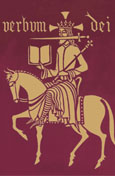
Sacred Web 27 is now available.
It contains many things of interest to readers of this blog, on Shi'ism, the Ismailis and one piece (by yours truly) on Henry Corbin:
Barzakh, the Opened Field
by Tom Cheetham
In this essay, which was delivered as a lecture at the University of Kent, Canterbury, England, in October, 2010, Cheetham discusses in a personal way his introduction to the seminal French philosopher, Iranophile, and Islamic scholar, Henry Corbin, and deals with several of his key ideas, focusing in particular on the notion of the barzakh, the isthmus or bridge between the outer and inner worlds, the imaginal realm where the “signs” of reality can be interpreted as on opened field of meaning. The essay concludes with an exploration of the relevance of Corbin's ideas to poetics and the transformative power of language.
It contains many things of interest to readers of this blog, on Shi'ism, the Ismailis and one piece (by yours truly) on Henry Corbin:
Barzakh, the Opened Field
by Tom Cheetham
In this essay, which was delivered as a lecture at the University of Kent, Canterbury, England, in October, 2010, Cheetham discusses in a personal way his introduction to the seminal French philosopher, Iranophile, and Islamic scholar, Henry Corbin, and deals with several of his key ideas, focusing in particular on the notion of the barzakh, the isthmus or bridge between the outer and inner worlds, the imaginal realm where the “signs” of reality can be interpreted as on opened field of meaning. The essay concludes with an exploration of the relevance of Corbin's ideas to poetics and the transformative power of language.
Tuesday, June 28, 2011
The Jung Wars revisited...
Back in June 2010 I posted a very short paragraph on The Jung Wars. I was slightly annoyed at the time by the persistent refusal of so very many academics to regard Jung with anything but disdain and deep suspicion. I pointed out Shamdasani's work as something of an antidote to the prevalent misreading of Jung. I have been surprised that this post has drawn an unusually large number of page views. During my recent travels I heard tales of woe from a friend concerning the problems one can have in certain academic circles if one has an interest in Jung or in Henry Corbin. They are both persona non grata. I have tried to do my part to show why Corbin's work, in spite of some faults, might yet be useful and interesting. So, although I try now to post things not directly related to Henry Corbin on my other blog, I'll add a further note on this topic here. One other most important critic and defender of the work of Jung who I should have mentioned before is Susan Rowland. Her books so far are these: Jung: A Feminist Revision (2002), Jung As A Writer (2005) and C.G. Jung in the Humanities: Taking the Soul's Path (2010). I look forward to Psyche and Ecocriticism which is due out next summer. Rowland has recently accepted a position in the Core Faculty at the Pacifica Graduate Institute in Santa Barbara. I recently retrieved a memory of her work from the recesses of my mind since it has important bearing on my current writings on Corbin, Jung and Hillman. I wish I had recalled it sooner.
Thursday, June 23, 2011
Hamann, again...
My interest in J.G. Hamann has re-awakened recently. Readers of this blog will know of his crucial importance for Henry Corbin. I want to note this audio file (available for a modest fee) of an interview with John Betz, author of the superb After Enlightenment.
Wednesday, June 22, 2011
Rothenberg on Bloom
Jerome Rothenberg - Harold Bloom: The Critic as Exterminating Angel
I'm so happy to have read this - thanks yet again to Ron Silliman. The essay is from Sulfur in 1981. Bloom has left his mark on Henry Corbin's legacy, through his introduction to the new edition of Corbin's Creative Imagination (renamed Alone with the Alone, I suspect at Bloom's suggestion) and through his own book Omens of Millennium. I have long had a hearty dislike for Bloom's work and I bristle at his readings of Corbin. Rothenberg's fine essay helps explain why I find Bloom's attitude so inimical to Corbin's entire project.
Jerome Rothenberg: Photo by Charles Bernstein.
I'm so happy to have read this - thanks yet again to Ron Silliman. The essay is from Sulfur in 1981. Bloom has left his mark on Henry Corbin's legacy, through his introduction to the new edition of Corbin's Creative Imagination (renamed Alone with the Alone, I suspect at Bloom's suggestion) and through his own book Omens of Millennium. I have long had a hearty dislike for Bloom's work and I bristle at his readings of Corbin. Rothenberg's fine essay helps explain why I find Bloom's attitude so inimical to Corbin's entire project.
Jerome Rothenberg: Photo by Charles Bernstein.
Friday, June 17, 2011
ESSWE3
The third biannual international conference of the European Society for the Study of Western Esotericism (ESSWE) “ESSWE3” will be held in Szeged, Hungary, on July 6-10.(Thanks to Heterodoxology for this.)
The complete Program is attached below - 10 pages in all. It looks very interesting - Moshe Idel will there, along with quite an array of others including Mark Sedgwick (Aarhus University / Center for Arabic Studies) on Sufism in the Romantic Imagination which I would love to hear.
ESSWE3 2011 Detailed Program Full
The complete Program is attached below - 10 pages in all. It looks very interesting - Moshe Idel will there, along with quite an array of others including Mark Sedgwick (Aarhus University / Center for Arabic Studies) on Sufism in the Romantic Imagination which I would love to hear.
ESSWE3 2011 Detailed Program Full
Thursday, June 16, 2011
Major Corbin Texts as pdf files
A variety of Corbin's texts have been posted (this time) to Scribd and can be found published HERE.
I will someday link to these separately in the Online Texts page...
PLEASE GO TO THIS PAGE FOR ALL ONLINE CORBIN TEXTS
I will someday link to these separately in the Online Texts page...
PLEASE GO TO THIS PAGE FOR ALL ONLINE CORBIN TEXTS
The Journal of the Eckhart Society
Medieval Mystical Theology, published as the Eckhart Review (ISSN 0969-3661) since 1992, is the new name of the peer-reviewed journal of The Eckhart Society.
The journal’s change of title reflects a broadening of its editorial
remit. The first issue under the new title will appear in 2011, but from
2012 the journal will increase to two issues per year.
Medieval Mystical Theology welcomes the submission of scholarly papers embracing all factors contributing to the understanding of medieval mystical theology. This includes not only the study of individual writers, but also movements, themes, developments, and ideas within the context of mystical theology in the Middle Ages. The journal embraces the influence of Neo-Platonism, Aristotelianism, Patristics, Judaism and Islam on Christian medieval mystical theology, as well as interpretations of the tradition for today. Comparisons between medieval mystical theology and other traditions, such as Buddhism, Hinduism, Taoism and Confucianism, are also within the compass of the journal. As the journal of The Eckhart Society, it especially welcomes scholarly studies of the life, work, and reception of Meister Eckhart. READ MORE AT THE HOME PAGE
Wednesday, June 15, 2011
Reason Unbound
Mohammad Azadpur
SUNY series in Western Esoteric Traditions
FORTHCOMING IN AUGUST
Of special note is Chapter 2:
To the Things Themselves: Corbin and Heidegger on Phenomenological Access
2.1. Phenomenology According to Henry Corbin
2.2. Heidegger’s Phenomenology
2.3. Two Contemporary Approaches to Heidegger’s Phenomenology
2.4. Back to Corbin
Subscribe to:
Posts (Atom)


