Friday, September 26, 2014


Monday, September 22, 2014
Sunday, September 21, 2014
10e Journée Henry Corbin
10e Journée Henry Corbin
Sous la présidence de Leili Anvar
Samedi 29 novembre 2014
INALCO
65 rue des Grands Moulins 75013 Paris
L’Homme parfait
Matinée :
9h30 Christian JAMBET : « L’Homme parfait, idéal de vie spirituelle selon Molla Sadra ».
10h30 Leili ANVAR : « L’Homme parfait est la lumière des cieux et de la terre : quelques remarques sur la figure de Shams dans l’œuvre de Rûmî ».
11h30 Pierre LORY : « Muhammad comme Homme parfait dans le soufisme ancien »
14h30 Alain LE BOULLUEC : « La doctrine du Vrai Prophète dans le roman pseudo-clémentin »
15h30 Remi MATHIEU : « L’idée d’Homme parfait dans la pensée chinois
Wednesday, August 27, 2014
A Meditation on Creative Imagination
by
Tom Cheetham
Phi Beta Kappa Lecture
Blaustein Center for the Humanities
March 29, 2013
Every thing possible to be believed is an image of Truth. - Wm Blake
Wednesday, August 13, 2014
Persian Calligraphy in Washington DC

Words Take Flight in Persian Calligraphy at Sackler Gallery
OPENING SEPT. 13, “NASTA‘LIQ: THE GENIUS OF PERSIAN CALLIGRAPHY” IS FIRST EXHIBITION ON PERSIA’S MOST POPULAR AND VISUALLY STUNNING SCRIPT
Media only:
Media website:
Media tours:
By appointment only beginning Sept. 9; email pressasia@si.edu to request
August 13, 2014
During a prolific 200-year period in the 14th–16th centuries, four master calligraphers invented one of the most aesthetically refined forms of Persian culture: nasta‘liq, a type of calligraphy so beautiful that for the first time the expressive form of the words eclipsed their meaning. “Nasta‘liq: The Genius of Persian Calligraphy,” opening Sept. 13 at the Smithsonian’s Arthur M. Sackler Gallery, displays 20 rarely seen masterworks created by the script’s greatest practitioners, tracing its evolution from a simple style of writing to a potent form of artistic expression.

PRESS IMAGES
Log in to download high-res images. These images are password-protected and are for media use only. For access, contact our public affairs office.
“Nasta‘liq represents one of the most accomplished forms of Persian art, developed at a time of cultural and artistic effervescence in Iran,” said Simon Rettig, exhibition curator and curatorial fellow at the Freer and Sackler galleries. “In a sense, it became the visual embodiment of the Persian language enthusiastically embraced from Istanbul to Delhi and from Bukhara to Baghdad.”
Each of the four masters featured in the exhibition—Mir Ali from Tabriz (active ca. 1370–1410), Sultan Ali from Mashhad (d. 1520), Mir Ali from Herat (d. 1545) and Mir Imad Hasani from Qazvin (d. 1615)—further evolved the nasta‘liq style, intentionally slanting the script for dramatic effect, modulating lines to balance fluidity and discipline, and adding delicate, twisting flourishes. Often attached to royal and princely courts, many calligraphers were the celebrities of their time, and visitors will learn fascinating anecdotes of fame and rivalry.
Mastering nasta‘liq can take a lifetime, but it remains the most popular form of Persian calligraphy today. A demonstration video in the exhibition, along with calligraphic tools and accessories, shows how techniques developed more than 500 years ago are still practiced by contemporary calligraphers.
Primarily drawn from the collections of the Freer and Sackler galleries, highlights include the only known signed work by the “inventor” of nasta‘liq Mir Ali from Tabriz, two folios from a collection of poetry by the late 15th-century ruler Sultan Husayn Bayqara and sumptuous illuminated pages from imperial Mughal albums.
The exhibition will be on view through March 22, 2015, and will be featured during the museum’s annual family festival celebrating Nowruz, the Persian New Year, Saturday, March 7, 2015. Other exhibition-related programs include a Point of View talk with exhibition curator Simon Rettig Oct. 14 and lectures by eminent specialists, including David J. Roxburgh of Harvard University Dec. 14 and Dick Davis of Ohio State University Jan. 25, 2015. For a full listing of related events, visit asia.si.edu/nastaliq.
The Arthur M. Sackler Gallery, located at 1050 Independence Avenue S.W., and the adjacent Freer Gallery of Art, located at 12th Street and Independence Avenue S.W., are on the National Mall in Washington, D.C. Hours are 10 a.m. to 5:30 p.m. every day (closed Dec. 25), and admission is free. The galleries are located near the Smithsonian Metrorail station on the Blue and Orange lines. For more information about the Freer and Sackler galleries and their exhibitions, programs and other public events, visit asia.si.edu or follow twitter.com/freersackleror facebook.com/freersackler. For general Smithsonian information, call (202) 633-1000.
Il logos dello ierofante
A new Phd Dissertation on Henry Corbin
Il logos dello ierofante.
Docetismo e metafisica dell'immagine nella filosofia delle religioni
di Henry Corbin
by Roberto Revello
(In Italian)
English Summary:
We outline a specific profile of philosophy of religion emerging from the work of Henry Corbin, a thinker who engages with contemporary issues, interpreter of the Iranian Shi’ite tradition and of the currents of Gnosis,. The first chapter is devoted to the phenomenological method of Docetism. Compared to the bettern-known issue of mundus imaginalis, the Docetism is equally crucial: it is familiar to many Eastern and Western gnostic currents – a downright critical theory of visionary knowledge, that rebuilds metaphysics in a perspective that goes beyond Nietzsche and Heidegger, and an ontology not primarily ontic, not simply predicative, but “ontophanique” (G. Durand). In the second chapter we have meant to discuss the docetist theoretical foundations of ‘image’, starting from the illusory paradox of the regard granted to imagination in the Islamic context, usually defined as aniconic. The aniconic instance is analysed starting from the contrast between “idol” and “icon”: the first is the opaque image, the second is the transparent mirror. The image, at that level, is not the imitation of a model, but the ability to mirror, and a constitutive relating with the other outside the self: unus ambo, dualitude. In the third chapter we present the main focus of this kind of Docetism: to actualize the spiritual. The specificity of the Iranian Islam is confronted with the Platonic tradition of the Russian theology, the psychology of Jung, and a Western archaic sense of the image. Finally, in order to avoid any relativist misunderstanding, we reflect, along with Corbin, upon what makes a vision true.
Friday, August 1, 2014

Friday, July 25, 2014

Friday, July 11, 2014

Saturday, June 28, 2014
Coming in Spring 2015
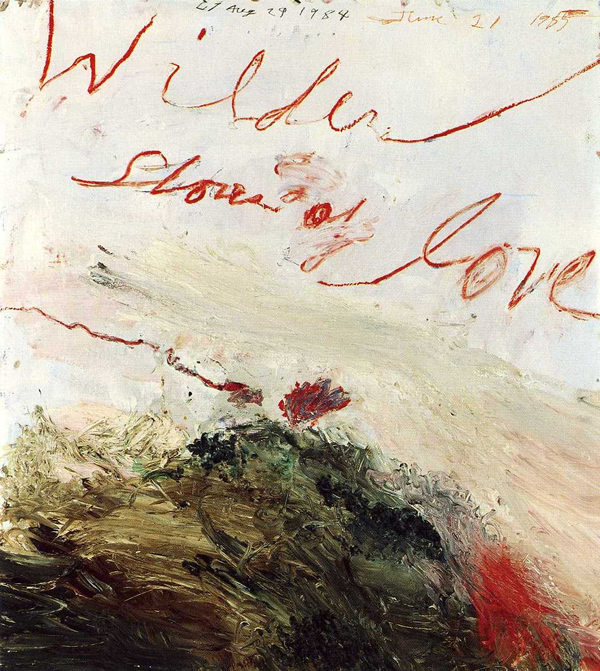
IMAGINAL LOVE
The Meanings of Imagination
in Henry Corbin and James Hillman
in Henry Corbin and James Hillman
by
Tom Cheetham
Spring Publications
Spring 2015
The final volume in the Henry Corbin Quintet
The final volume in the Henry Corbin Quintet
Cheetham’s book is a jewel that returns us to the “wild energies of creation” through his lucid and passionate dedication to the necessity of imagination for soul. His book offers the essence of these thinkers as alchemical transformers of being in the anima mundi. Imaginal Love returns psyche to cosmos: as organ of imag(e)inging where we embody the angels. - Susan Rowland Ph.D. Pacifica Graduate Institute. Author of Jung as a Writer (Routledge, 2005) and The Ecocritical Psyche: Literature, Evolution, Complexity and Jung, (Routledge, 2012)
Tom Cheetham shows the heights that independent scholars outside academia can achieve. His prior work has virtually defined independent scholarship on Henry Corbin. In Imaginal Love, he has turned his gifts to "the meanings of imagination in James Hillman and Henry Corbin." The result is a powerful contribution to our understanding of the full meaning of imaginal love -- and the central role of such love in human life. - Michael Lerner, President, Commonweal.
I will not forget this book. It has subtly but, I suspect, permanently shifted the way I look at reality, the way I listen to language. - Cynthia Bourgeault, retreat leader and writer, author of The Wisdom Way of Knowing, The Holy Trinity and the Law of Three, and Mystical Hope.
Monday, June 23, 2014
Exclusionary Philosophy
This great little essay is worth noting by all readers of this blog.
It reminds me of Castoriadis' attempt (not unrelated I think) to include the imagination in philosophy:
"[P]hilosophers almost always start by saying: “I want to see what being is, what reality is. Now, here is a table; what does this table show to me as characteristic of a real being?” No philosopher ever started by saying: “I want to see what being is, what reality is. Now, here is my memory of my dream of last night; what does this show me as characteristic of a real being?” No philosopher ever starts by saying “Let the Requiem of Mozart be a paradigm of being”, and seeing in the physical world a deficient mode of being..."
William Chittick at academy.edu
This from Mohammed Rustom:
Here is a link to Professor Chittick's academia.edu page. It gives full access to all of his articles published to date. Most of them are up there now, and few dozen more will be added in upcoming weeks. There are also some translations of his articles available here, as well as several of his interviews:
If you do not have an academia.edu account, you'll need to create one (free of charge) in order to download the articles (although without an account you can still view most of them). Having an academia.edu account also gives access to the works of many other scholars in Islamic Studies (and various other disciplines).
Monday, June 9, 2014
Thursday, May 8, 2014
Mystical Theology Conference - Liverpool in July

Mystical Theology and Continental Philosophy
Historical and Contemporary Perspectives Conference
11th - 13th July 2014
Tuesday, April 8, 2014
On the Deification of Jesus
An interview with Bart Ehrman. Ehrman is the author of several books about early Christianity,
including Misquoting Jesus and Jesus Interrupted.
Subscribe to:
Posts (Atom)


 Posts
Posts

