Wednesday, March 9, 2016
Symbolic Cities at the Sackler Gallery

Symbolic Cities: The Work of Ahmed Mater
March 19–September 18, 2016
Arthur M. Sackler Gallery
Born in 1979 in southern Saudi Arabia and trained as a medical doctor, Ahmed Mater has been a practicing artist since the early 1990s, creating works that offer an unparalleled perspective on contemporary Saudi Arabia. Now based in Jeddah, Mater has focused primarily on photography and video since 2010. From abandoned desert cities to the extraordinary transformation of Mecca, Symbolic Cities presents his visual and aural journeys observing economic and urban change in Saudi Arabia. The exhibition, the first in the United States solely dedicated to Mater, also debuts new works based on his extensive research on Riyadh's development.


Friday, March 4, 2016
An Acoustic Museum of Byzantine Sound

by Allison Meier in Hyperallergic
The sonic intentions of architecture are often lost over the centuries. In 2014, a team of researchers investigated the acoustics of Byzantine churches in Thessaloniki, Greece, to retrieve some of that design through sound mapping.
On an episode released last month of the podcast Escape Velocity, created by the University of Southern California (USC) Viterbi School of Engineering, Sharon Gerstel, an art history professor at the University of California, Los Angeles (UCLA), explained why she became involved in this acoustic archaeology:
"For me as an art historian, I was interested in the perception of sound and how that perception was informed by the setting. When you walk into these buildings, they’re cooler than the outside temperature, they smell different on the inside because they’ve had incense in them burned for centuries, so there’s the palpable change in the atmosphere. They’re dark on the inside and you see the painted figures looming from all sides of the building, looking at you." go to the article with audio files linked.
Tuesday, March 1, 2016
Our Divine Double

Charles Stang
Harvard University Press
March 2016
Henry Corbin figures prominently in the Introduction.
What if you were to discover that you were not entirely you, but rather one half of a whole, that you had, in other words, a divine double? In the second and third centuries CE, this idea gripped the religious imagination of the Eastern Mediterranean, providing a distinctive understanding of the self that has survived in various forms throughout the centuries, down to the present. Our Divine Double traces the rise of this ancient idea that each person has a divine counterpart, twin, or alter-ego, and the eventual eclipse of this idea with the rise of Christian conciliar orthodoxy.
Charles Stang marshals an array of ancient sources: from early Christianity, especially texts associated with the apostle Thomas “the twin”; from Manichaeism, a missionary religion based on the teachings of the “apostle of light” that had spread from Mesopotamia to the Mediterranean; and from Neoplatonism, a name given to the renaissance of Platonism associated with the third-century philosopher Plotinus. Each of these traditions offers an understanding of the self as an irreducible unity-in-duality. To encounter one’s divine double is to embark on a path of deification that closes the gap between image and archetype, human and divine.
While the figure of the divine double receded from the history of Christianity with the rise of conciliar orthodoxy, it survives in two important discourses from late antiquity: theodicy, or the problem of evil; and Christology, the exploration of how the Incarnate Christ is both human and divine.
Contents:
Introduction: Narcissus and His Double
1. Reading Plato’s Many Doubles
2. Thomas, Who Is Called “Twin”
3. Syzygies, Twins, and Mirrors
4. Mani and His Twin-Companion
5. Plotinus and the Doubled Intellect
6. Whither the Divine Double?
Conclusion
Monday, February 29, 2016
On Kierkegaard and Subjectivity

In The NYTimes
FEBRUARY 28, 2016
This essay reminds me how Kierkegaardian Corbin's thought is.
And how important.
Saturday, February 27, 2016
Space Ontology
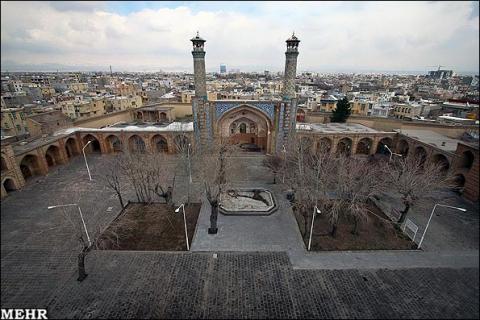
Jameh Mosque, Qazvin, Iran
Space Ontology International Journal (SOIJ) published by Qazvin Islamic Azad University (located in Iran) is a scholarly open access, peer-reviewed, quarterly and fully refereed journal with a primary objective to provide the academic community for the submission of new ideas, the state of the art research results and fundamental advances in all aspects of Architecture, Urban Design and Planning.
Current Issue: Volume 4, Issue 3, Autumn 2015, Page 1-74
Page 19-28
Hossein Soltanzadeh
Wednesday, February 24, 2016
The Scholastic Imagination - Mundus imaginalis & intellectus agens

He writes,
I’ve recently been reading up on medieval theories of cognition. The background is a paper I’m writing on esotericism and “kataphatic practices” – contemplative techniques where the practitioner uses mental imagery, sensory stimuli, and emotions to try and achieve some religious goal: Prayer, piety, divine knowledge, salvation, etc. Kataphatic practices may be distinguished from “apophatic” ones, which, although they may be pursuing the same goals, use very different techniques to achieve them: withdrawing from sensory input and attempting to empty the mind of any content, whether affective, linguistic, or imagery-related (note that the kataphatic-apophatic distinction is more commonly used as synonymous with positive vs. negative theology– that’s a related but separate issue to the one I talk about here). My argument is that esoteric practices are typically oriented toward kataphatic rather than apophatic techniques. The cultivation of mental imagery is usually key – which means that the notion of “imagination” needs to be investigated more thoroughly...
Later on in his post we find this:
But also on the theoretical side, it is tempting to say that the scholastic imagination exerted a major, long-lasting influence on various “esoteric epistemologies”. In a sense, this is a trivial observation: the imagination as a separate cognitive faculty, or an “inner sense” involved with perception and apprehension is an Aristotelian notion, and that Aristotelian notion re-entered European intellectual discourse through the Persian, Andalusian, Italian, and German scholars I have mentioned here. Moreover, that the “phantasms” created by the imaginative faculty can be mined for mystical insights is a notion that appears to enter European religious/intellectual discourse through Bonaventure’s synthesis of Aristotelianism and illuminationism.
So, if we look at the famous illustration in Robert Fludd’sUtriusque cosmi historia (“History of the two worlds”, 1617-1621) of how the cognitive system and (external and internal) senses reach out to the three worlds, at least on the cognitive side we still see the basic framework of Avicenna, Averroes, and Bonaventure. He lodges “imagination” between “sensation” and “mind”, with a window on to the mundus imaginalis, the “shadows” of the world. The connection of God and the angels with the “intellectual world”, influencing the “mind” and playing a direct part in assessing the images sent forward from imagination, still echoes the scholastic interpretation of Aristotle’s “agent intellect” acting on the “passive intellect”...
Thursday, February 18, 2016
Persian Gardens
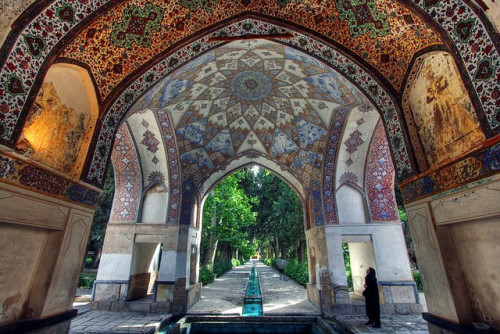
LM Farahani, B Motamed, E Jamei - 2016
... Based on Henry Corbin's study on the Mazdean cosmology, Alemi argues that Persian
chahar-bagh is a symbol of the universe, including the elements that can be found in a Persian
chahar-bagh (Alemi 1390). In chahar-baghs, terraces symbolize the ...
Friday, February 5, 2016
Sufis and Mullahs: Sufis and Their Opponents in the Persianate World - April 2016 at Exeter
A three-day conference at the Institute of Arab and Islamic Studies
Sufis and Mullahs: Sufis and Their Opponents in the Persianate World
14-16 April 2016
University of Exeter, UK
University of Exeter, UK
With the controversial trial, and later, martyrdom of Mansur al-Hallaj in 922, the science of Sufism (’ilm al-tasawwuf) itself became severely contested by members of the orthodox Sunni religio-political establishment. Members of the Baghdad School of Sufis were persecuted in a series of inquisitions (mihan) conducted by the popular preacher Ghulam Khalil, who had accused them of being heretical antinomians (ahl al-ibaha). This was just the beginning of what was to become a contest between two quite separate visions of religion: a hardline legalistic, often puritanical, scripturalism promulgated by the exoteric theologians (’ulama al-zahir) and a tolerant, ecumenical, and broadminded intuitive approach to Islam advocated by Sufis whose vision of Canon Law of Islam (shari’a) accentuated the interior dimensions of its dogmas, rites and rituals, believing that God is better approached and apprehended by internal remembrance of the heart (dhikr), especially when amplified by listening to erotic poetry sung to musical accompaniment (sama’), than through legalistic speculation, ratiocination and logical argumentation.
With the rise of state-sponsored extremist Shi‘ite clericalism under the Safavids in the sixteenth and seventeenth centuries, most of the Sufi Orders were suppressed and driven out of Persia. A whole literature of anti-Sufi polemics was generated from the mid-sixteenth down to the early twentieth century in Persia, the social after-effects of which can be seen today in the current widespread destruction or state expropriation of Sufi shrines on the part of hardline Shi‘ite clerics in the Islamic Republic of Iran during the past three and a half decades, and the ongoing persecution, harassment and imprisonment of Sufis there.
On the literary level, many centuries before the rise of the Safavids, in classical Persian Sufi poetry one finds a similar opposition between juridical and Sufi Islam expressed in poetic imagery and figures of speech, a contested religious vision from which was generated several rich genres of satirical anti-clerical poetry in Persian known as ‘Songs of Infidelity’ (Kufriyya), ‘Wild-man Poetry’ (Qalandariyya) and ‘Sufi-Zoroastrian-symbolist verse’ (Gabriyya).
Bringing together scholars and specialists on Sufism from around the world, this conference, focused geographically on the Persianate world of greater Iran, Anatolia, the Ottoman Empire, and Central Asia, aims to examine the theological, philosophical, and literary dimensions of the Sufi/anti-Sufi conflict as much as its socio-historical causes and origins.
Wednesday, February 3, 2016
Henry Corbin et la gnose iranienne
We have this thanks to Les Amis in Paris:
Germain, G., « Henry Corbin et la gnose iranienne », Cahiers du Sud, t. LV, no. 371, 1963, p. 108-118.
Extrait : L’œuvre d'Henry Corbin, avec ses feux voilés, mais aux radiations pénétrantes, commence à percer en dehors des cercles spécialisés. Peut-être même - et ce serait un symptôme favorable - les opacités qu’elle rencontre s’observeraient- elles plutôt du côté des islamologues. Remarque qui ne veut pas être une insolence à leur égard ; il est inévitable que des recherches neuves et un tour d’esprit très personnel suscitent des réticences chez ceux qui se pensent en possession des « bonnes méthodes ». Gabriel Germain, Henry Corbin et la gnose iranienne, p. 108.
- See more HERE
Monday, January 11, 2016
The Institutionalization of Philosophy

Tuesday, January 5, 2016

Wednesday, December 30, 2015
On ta'wil
Esoteric Interpretations of the Qur’an: Foundations of Shia Ismaili Ta’wil
on
In current usage, ta’wil is said, and rightly, to be a spiritual exegesis that is inner, symbolic, esoteric, etc. Beneath the idea of exegesis appears that of a Guide (the exegete), and beneath the idea of exegesis we glimpse that of an exodus, of a “departure from Egypt,”, which is an exodus from metaphor and the slavery of the letter.
Henry Corbin, (Avicenna and the Visionary Recital, 29)
The ta’wil, without question, is a matter of harmonic perception, of hearing an identical sound (the same verse, the same hadith, even an entire text) on several levels simultaneously.
Henry Corbin, (Spiritual Body & Celestial Earth, 54)
Friday, December 11, 2015
A new photo for the Archive

We have this little gem from Jean Louis Gaillemin, who writes,
The fourth person is Robert Bosnak, who confirms the date as 1973.
Many thanks to Jean Louis for sending this!
Wednesday, December 9, 2015
Joyce & the Bab - A remarkable new essay by Todd Lawson
We are the first generation in the West able to read the Koran,
if we are able to read Finnegans Wake. ~ Norman O. Brown
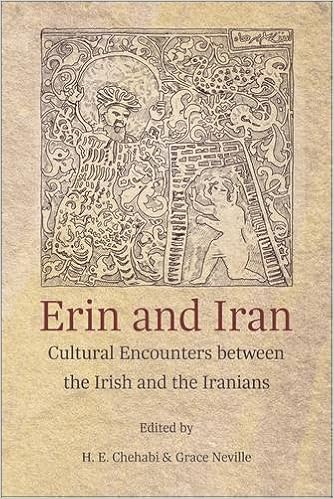
“Joycean Modernism in a Nineteenth-Century Qur’an Commentary?:
A Comparison of the Bab’s Qayyūm Al-Asmā’ with Joyce’s Ulysses.”
by Todd Lawson
In
Erin and Iran:
Cultural Encounters between the Irish and the Iranians
edited by H. E. Chehabi and Grace Neville,
Boston & Washington D.C.:
Ilex Foundation & Center for Hellenic Studies,
Trustees of Harvard University, 2015, pp. 79–118.
On amazon HERE.
"Numerous structural, thematic, and reception parallels exist between two otherwise quite incommensurable literary works. The one is James Joyce’s well-known, controversial and vastly infuential Ulysses, generally considered the frst major work of the modernist move-ment in European literature. The second, entitled Qayyūm al-asmā’,2 is the virtually unknown, unpublished and unread yet highly distinctive and un-usual commentary on the 12th sura of the Qur’an by the Iranian prophet Seyyed Ali Mohammad Shirāzi (1819–50), better known to history as the Bab. By suggesting the existence of parallels and similarities between these two works it is not also suggested that there is any sort of connection between them or their authors, genetic, social, historical, or otherwise. But, both authors wrote at specifc and intense moments of cultural crisis and change in their respective socio-historical situations. And each was profoundly and acutely aware of the particular centrality of the literary tradition in which they wrote and the literary weight of the sources and models for their respective compositions. In the case of Joyce and Ulysses, the weight and authority of this literary history is represented by the Odyssey and Joyce’s appropriation (and simultaneous celebration and critique) of the epic tradition, exemplifed by the Odyssey. In the case of the Bab and his Qayyūm al-asmā’, the quite considerable and truly unique weight and authority of his tradition is represented by the Qur’an, on which this ostensibly exegetical work is modeled…"
Wednesday, December 2, 2015
France Culture Broadcast available online
France Culture Broadcast
Abdenour Bidar's interview with Hélène Senglard-Foreman,
the translator of my first book in French as L'Envers du Monde:

Subscribe to:
Posts (Atom)


 Posts
Posts

